Although women are playing an increasingly prominent role in Lithuania’s music industry, gender equality remains a goal rather than a reality. According to data from the Vilnius Night Office, women accounted for an average of just 18.4% of performers taking the stage at the city’s grassroots music venues in 2025. Five professionals working across different areas of the music industry came together to discuss this imbalance, persistent stereotypes, women’s leadership, and the importance of mutual support.
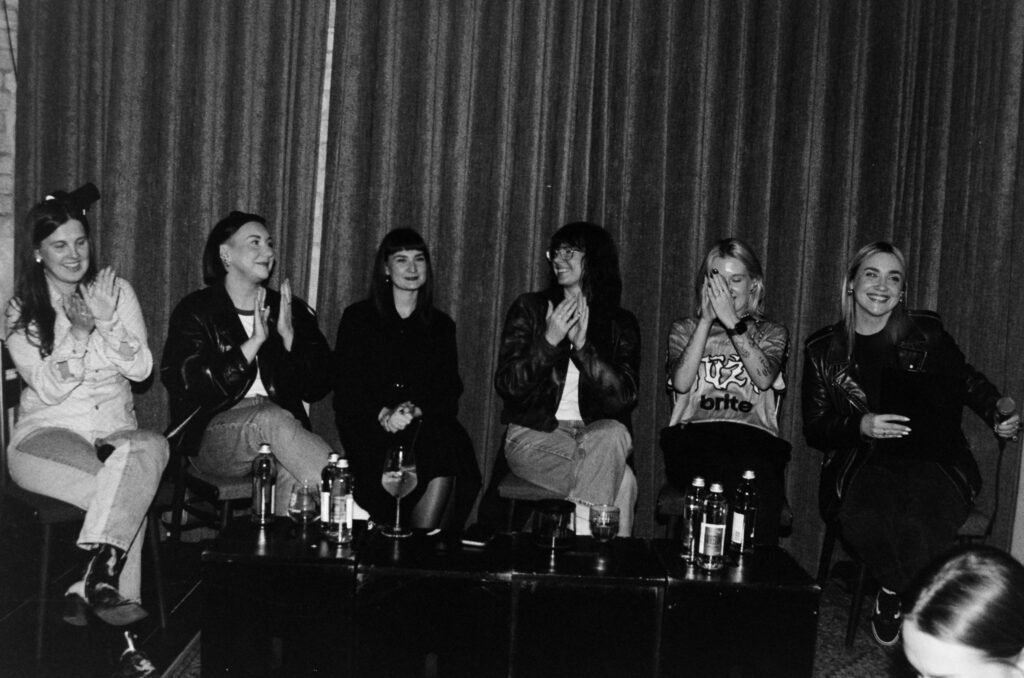
The discussion was initiated by Estradà, Vilnius’ first officially designated grassroots music venue, which invited women working in different areas of the music industry to share their experiences and perspectives.
The panel featured film and event producer and artist manager Aušra Kareniauskaitė; Dominyka Motiejūnaitė, founder of the agency „Žiauru“; creative projects producer Raminta Masiulytė-Jazdauskė; singer and founder of Find Your Voice, Lina Štalytė; and Vilnius Night Office Project Manager Gabija Liaugminaitė. The discussion was moderated by radio and television presenter Eglė Kernagytė.
Stereotypes persist, but attitudes are changing
One of the central topics of the discussion was the deeply rooted perception of women’s competence in the music industry. The panellists shared experiences of having their professional abilities underestimated and encountering assumptions that women know less about certain fields or are less capable of doing their jobs. They also discussed unpaid or undervalued work and situations in which women are expected to go to greater lengths to prove their competence.
Singer Lina Štalytė, who performs in France, described encountering sexist attitudes even at prestigious concert venues in Paris. According to her, there are situations in which technical staff fail to listen to her needs, disregard technical requirements, or decide that certain equipment is unnecessary for her. Such attitudes are sometimes accompanied by sexist remarks and unprofessional communication.
However, she described her experiences in Lithuania much more positively. Lina emphasised that her interactions with Lithuanian sound engineers have generally been professional, with her technical needs taken seriously and her requirements met. This contrast highlights how respectful and professional communication depends not only on the country or the prestige of a venue, but also on the working culture of the team involved.
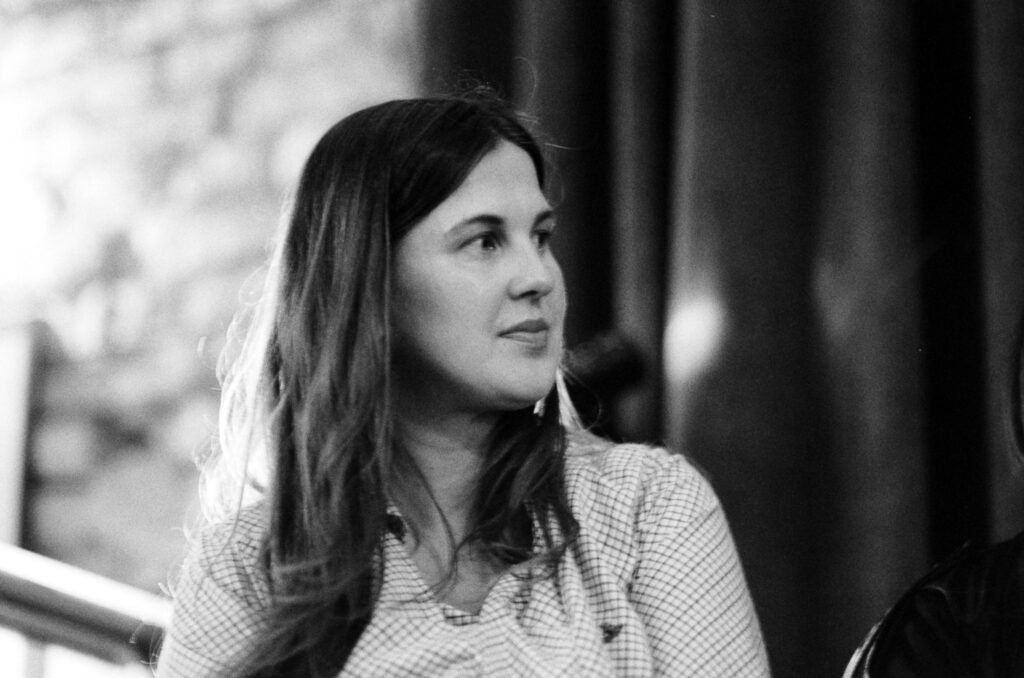
Creative projects producer Raminta Masiulytė-Jazdauskė encountered similar prejudices early in her career. She recalled frequently being told what to do, while those around her often underestimated her knowledge and abilities. Rather than accepting these attitudes, Raminta made an effort to learn as much as possible, asking questions, fact-checking, and exploring professional matters in greater depth. Over time, she not only demonstrated to others that her abilities were no less than those of her colleagues, but also became convinced of this herself.
The panellists also acknowledged positive changes. Having overcome numerous stereotypes and prejudices throughout their careers, they now feel more confident, make decisions more boldly, and see growing opportunities for women to take on leadership roles in the music industry.
However, as Dominyka Motiejūnaitė, founder of the agency „Žiauru“, emphasised, it is important not to create the impression that all problems have already been resolved. Although progress is evident, considerable change is still needed in the music industry, and it would be premature to claim that gender equality has been achieved.
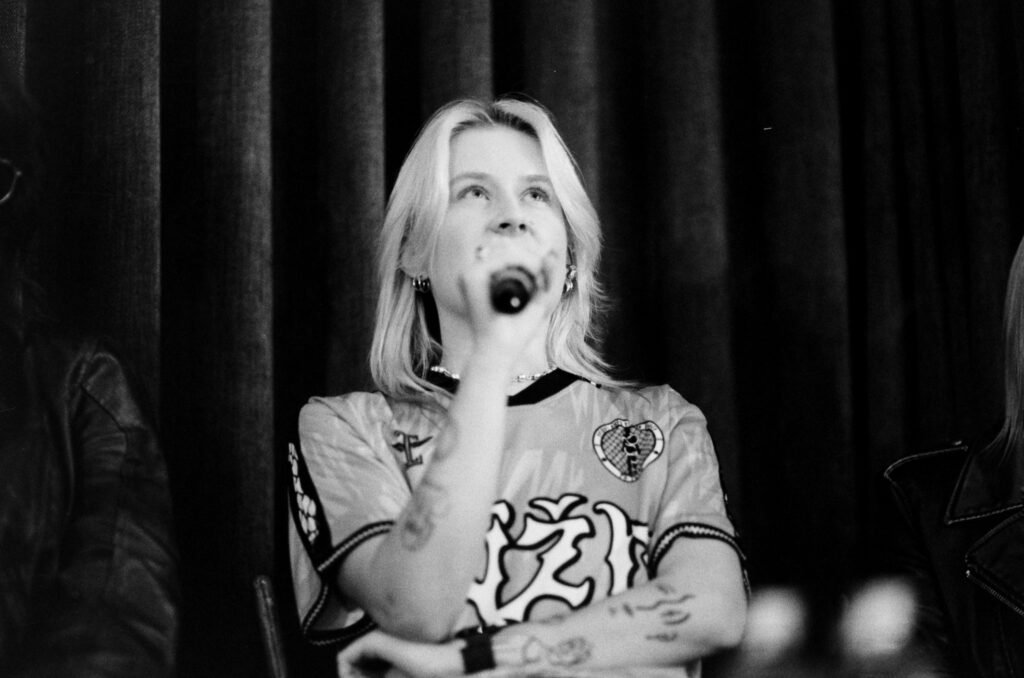
Women account for just 18.4% of performers on average at Vilnius’ grassroots music venues
Gender representation on stage was also addressed by Vilnius Night Office Project Manager Gabija Liaugminaitė, who presented data from the city’s grassroots music venue support programme.
In 2025, a total of 2,825 performers took the stage at music venues participating in the Vilnius grassroots music venue programme. Data collected by the Vilnius Night Office shows that women accounted for an average of just 18.4% of performers across these venues.
These figures highlight the continued need to address women’s visibility on the music scene. During the discussion, Liaugminaitė emphasised that the long-term ambition is to achieve gender balance on stage, with women accounting for at least half of the performers featured in event line-ups.
To help achieve greater gender balance, the Vilnius Night Office strives for more equal representation of women and men at its own events. It also engages with music venue managers on women’s visibility, artist selection, and the development of more inclusive concert programmes. Education and dialogue with music industry professionals are an important part of this work, encouraging them to reflect on established practices and explore ways to change them.
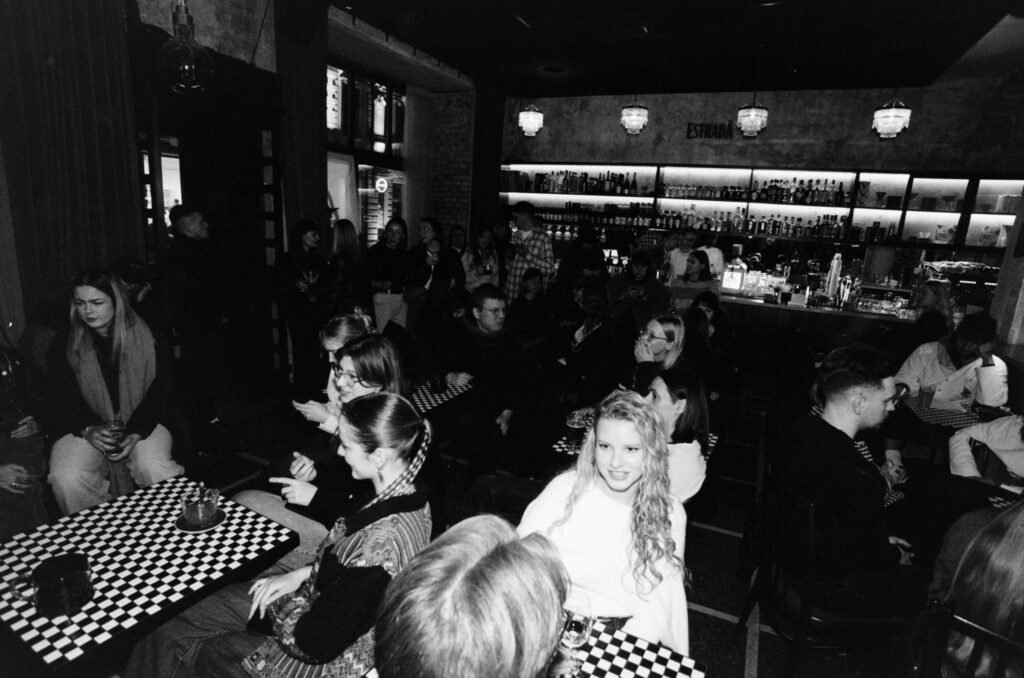
A safer environment is essential to equal opportunities
When discussing women’s opportunities in the music industry, it is important to consider not only their visibility on stage or representation in leadership positions, but also their working conditions. Women frequently experience sexual harassment, and in the music industry, this issue affects not only concertgoers but also performers, managers, and other industry professionals. Sexual harassment can occur backstage, during rehearsals, at work meetings, or in other professional settings.
Gender equality in the music industry is therefore inseparable from a safe and respectful working environment. What matters is not only how many women we see on stage, but also the conditions in which they work, whether their professional needs are respected, and whether they feel safe.
Together with the city’s nightlife venues, the Vilnius Night Office is implementing a range of measures to prevent sexual harassment and other risks.
These include sexual harassment prevention training for nightlife venue staff, helping employees recognise inappropriate behaviour, respond appropriately, and provide assistance. The internationally recognised Angel Shot code is also being introduced, allowing visitors to discreetly ask staff for help when they feel unsafe.
The Vilnius Night Office also works with the organisation Ribologija to initiate legislative changes aimed at strengthening sexual harassment prevention. In addition, it monitors and works to prevent drink spiking — the administration of intoxicating substances without a person’s knowledge or consent — at nightlife venues across the city.
These initiatives aim to create a safer and more inclusive nightlife environment where visitors, music industry professionals, and performers can feel more secure.
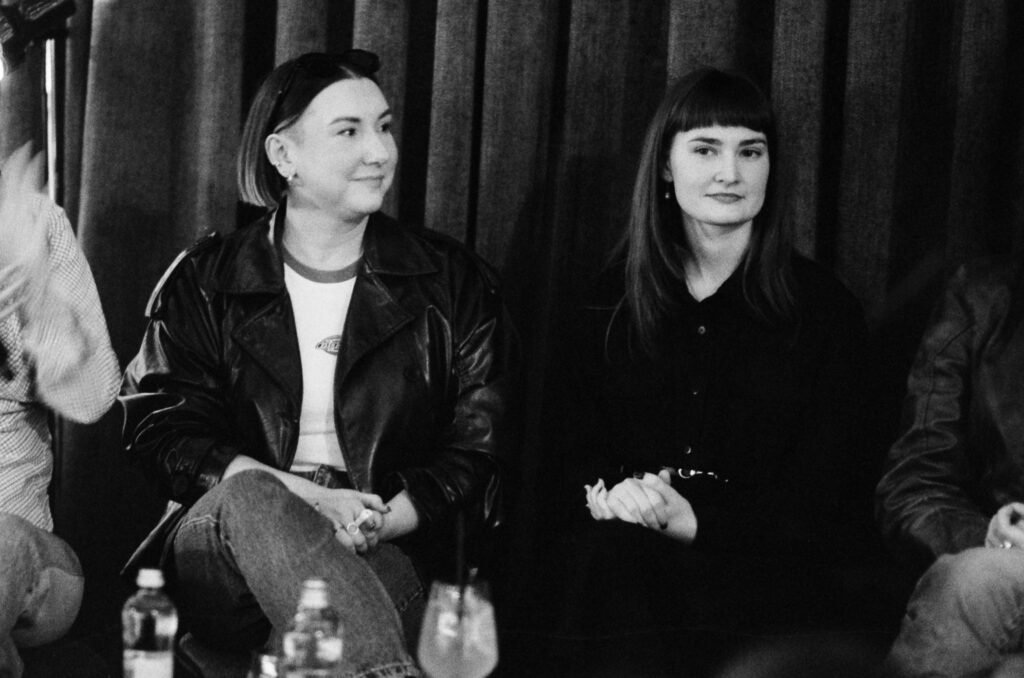
Mentorship, collaboration, and the courage to take action
The discussion also placed considerable emphasis on mutual support and collaboration among women. The panellists highlighted how sharing experiences, knowledge, and professional contacts can help overcome challenges while creating more opportunities for other women.
Singer Lina Štalytė stressed the importance of mentorship among women — learning from one another, sharing knowledge, and supporting emerging artists and professionals entering the industry.
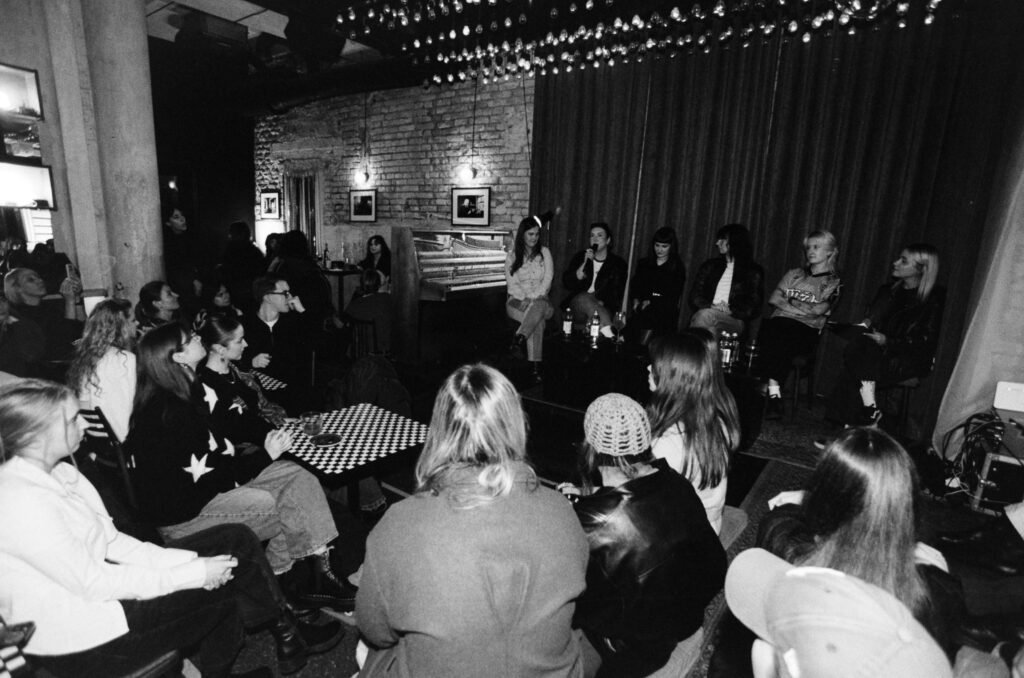
Aušra Kareniauskaitė shared a practical example of this kind of collaboration. Together with friends who also work as artist managers, she has a group chat where they exchange experiences, advice, and useful information. She emphasised the importance of creating an environment in which women can support one another, while maintaining healthy competition that encourages professional growth.
Dominyka Motiejūnaitė, founder of the agency „Žiauru“, pointed out that even painful professional experiences can become a driving force to keep moving forward. Rather than giving up in the face of setbacks or being underestimated, such experiences can provide the motivation to pursue one’s own path, take on new initiatives, and create opportunities independently.
Raminta Masiulytė-Jazdauskė also encouraged women not to be afraid to try new things, stay curious, find like-minded people, and trust their abilities. Her experience demonstrates how curiosity, perseverance, and a willingness to keep learning can help overcome prejudice and establish a place in the professional world.
The discussion highlighted that although women’s role in Lithuania’s music industry is growing stronger, individual determination alone is not enough. The industry itself must create an environment where women are not constantly required to prove their competence, and where opportunities to create, lead, and perform are not determined by gender.