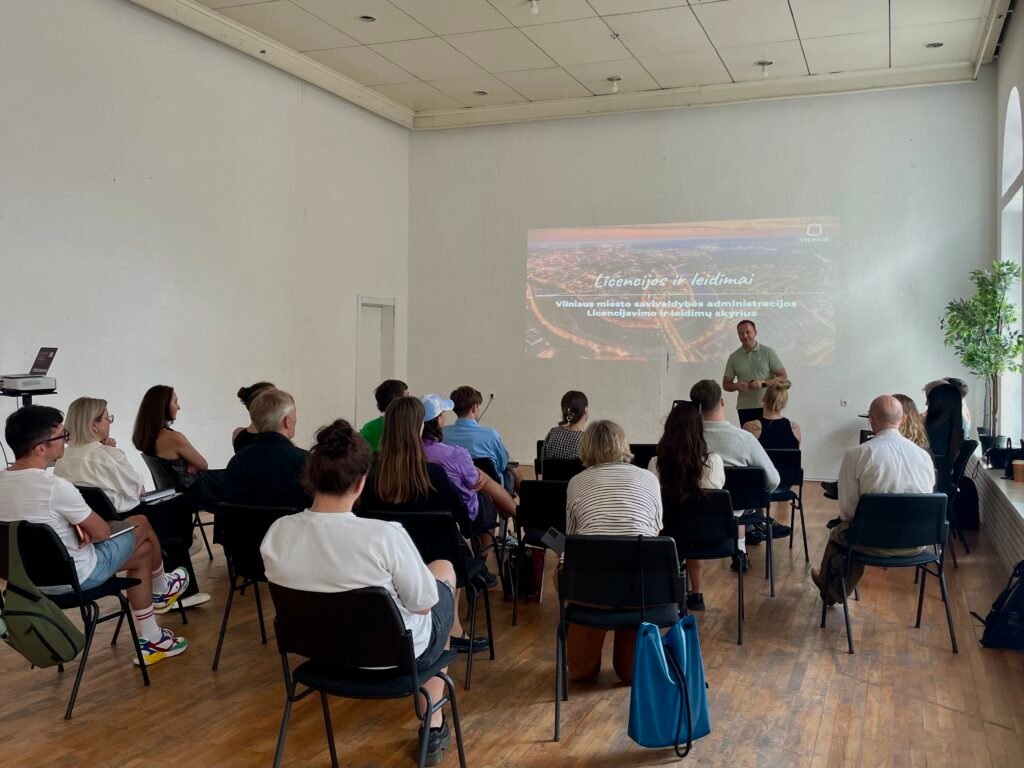
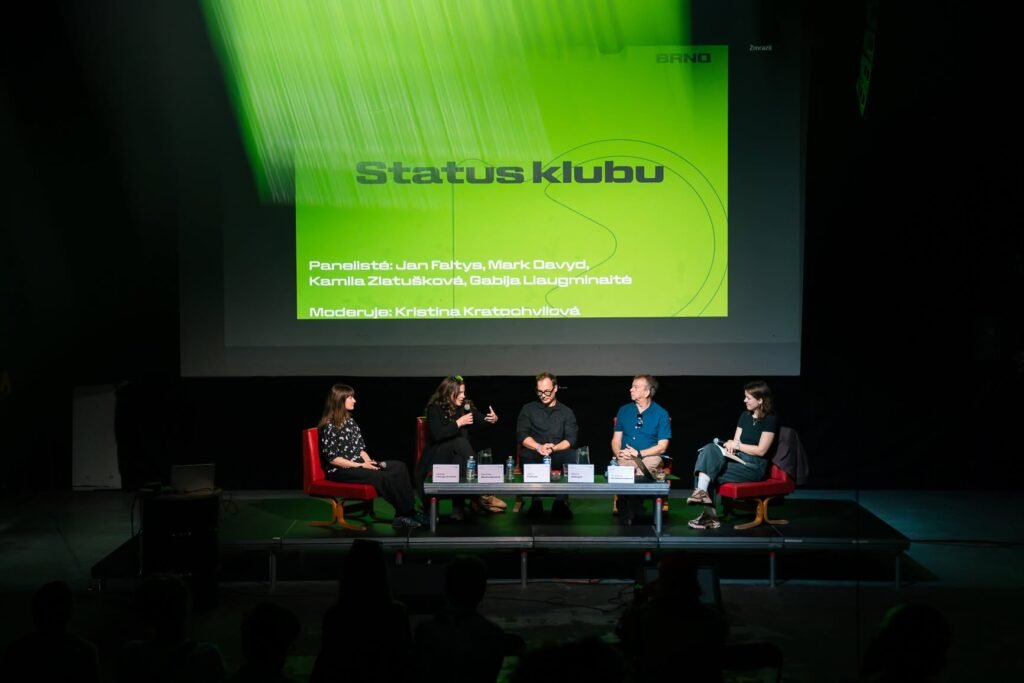
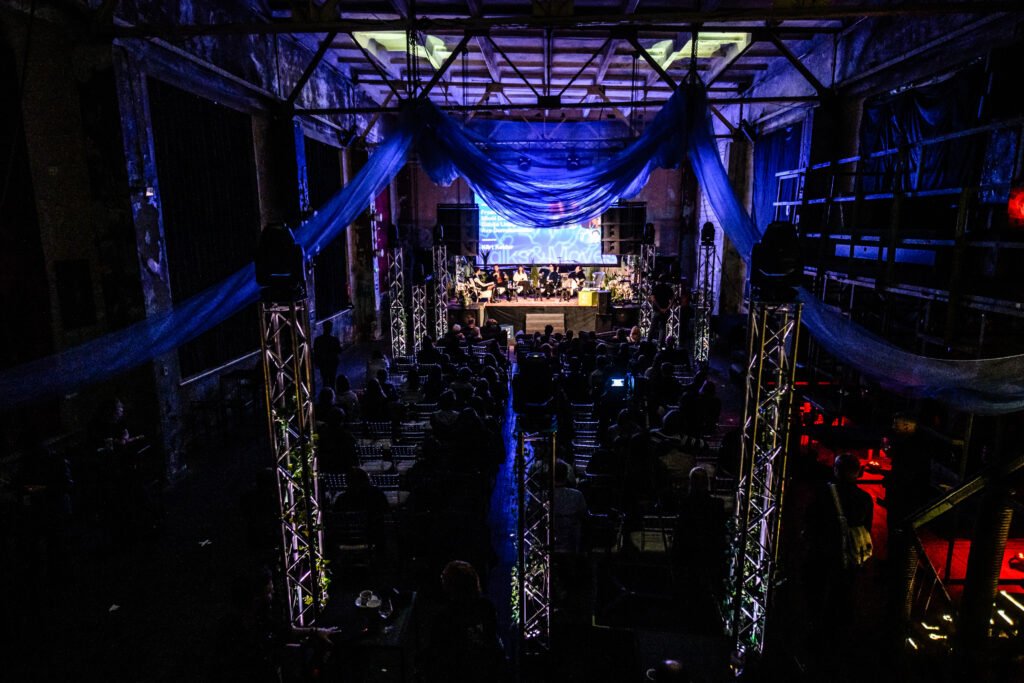
On 9 October, representatives of European cities, clubs, the music industry and cultural organisations gathered at HALL nightclub in Tallinn for the international conference Dance Floor of Democracy: Talks. The event explored the role of clubs in democratic societies, the importance of queer culture, representation of the music sector’s interests and the role of cities in supporting nightlife culture. Vilnius Night Office actively participated in discussions alongside representatives from Amsterdam, Vienna and Tallinn.
Organised by Goethe-Institut Estonia, the conference also included a guided tour of Tallinn’s nightlife and cultural venues. Participants visited Studio, D3 and Fonoteek clubs, the Uus-Laine cultural space and Paavli Kultuurivabrik, a cultural venue located in a former industrial complex. The visits offered an opportunity to explore Tallinn’s diverse music and nightlife spaces, their activities and infrastructure.
Clubs as Spaces for Community and Cultural Expression
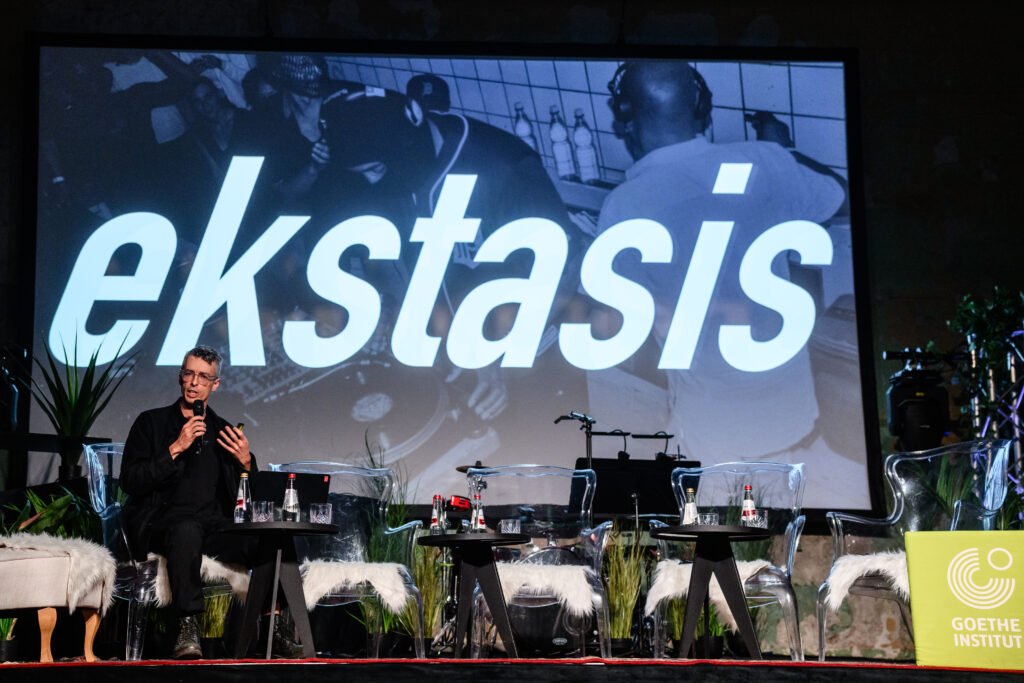
Opening the conference, Dr Martin Fuller of the Tresor Foundation explored the relationship between club culture and democracy in his presentation, Club Culture as a Democratic Practice. He described clubs as spaces where different communities come together, social connections are formed and people learn to share space with others. According to Dr Fuller, club culture in Germany can help challenge racism, xenophobia and exclusion promoted by far-right political movements by fostering values of inclusion, solidarity and mutual respect.
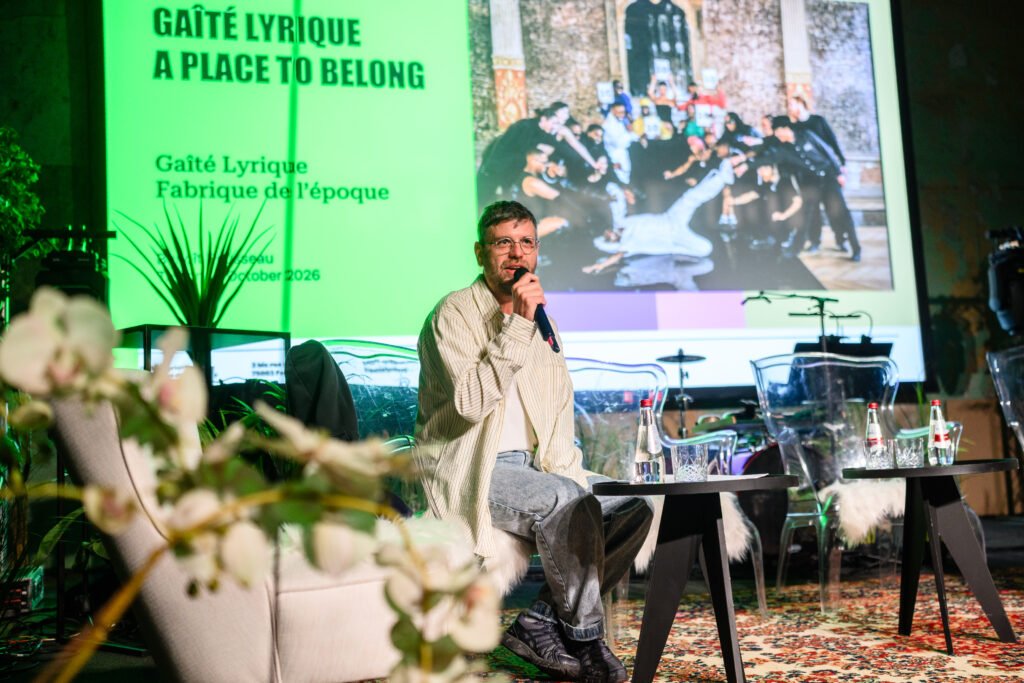
Benoît Rousseau, Head of Music and Dance Programming at the Parisian cultural centre Gaîté Lyrique, presented the centre’s activities, with a particular focus on queer culture and voguing. Originating in Black and Latino LGBTQ+ communities in New York, voguing has become an important form of self-expression, identity and community building. The example of Gaîté Lyrique demonstrated how a cultural institution can provide space for these communities and creative practices, help them reach wider audiences and increase their visibility within a city’s cultural life.
The contribution of nightlife culture to urban life was further explored in the discussion It Takes a Dance Floor to Raise a City, featuring Benoît Rousseau, music artists Miia Magia and Chloe Lula, and Estonian nightlife representatives Helgi Saldo, Kevin Telliskivi and Micaela Saraceno. The discussion examined how clubs and dance floors contribute to cultural diversity, community building and a city’s identity.
Different Cities, Different Approaches to Supporting Nightlife Culture
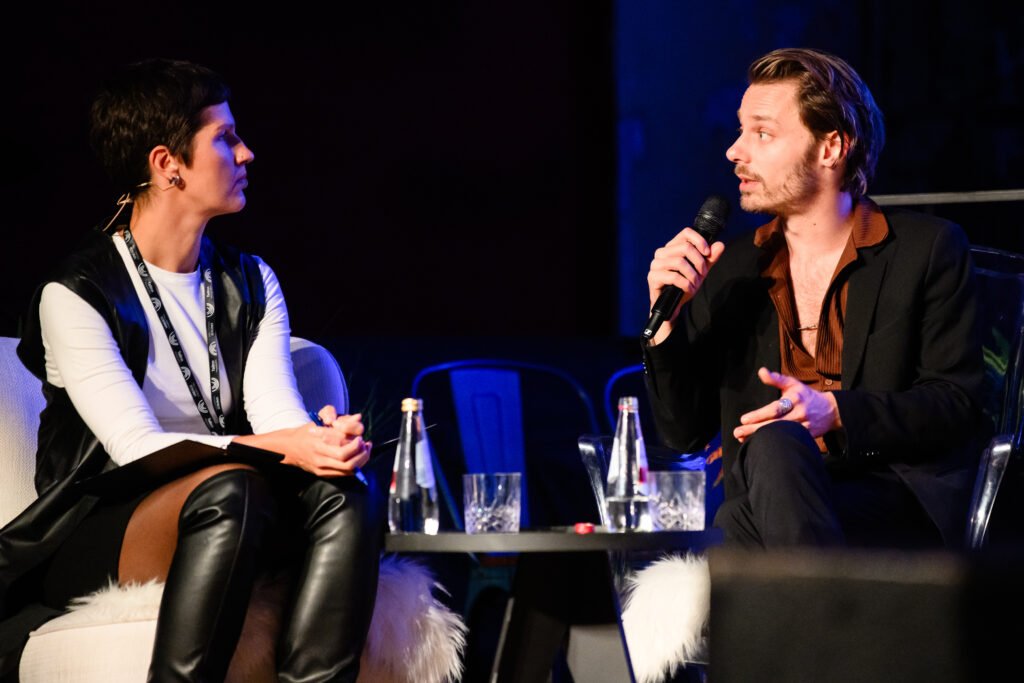
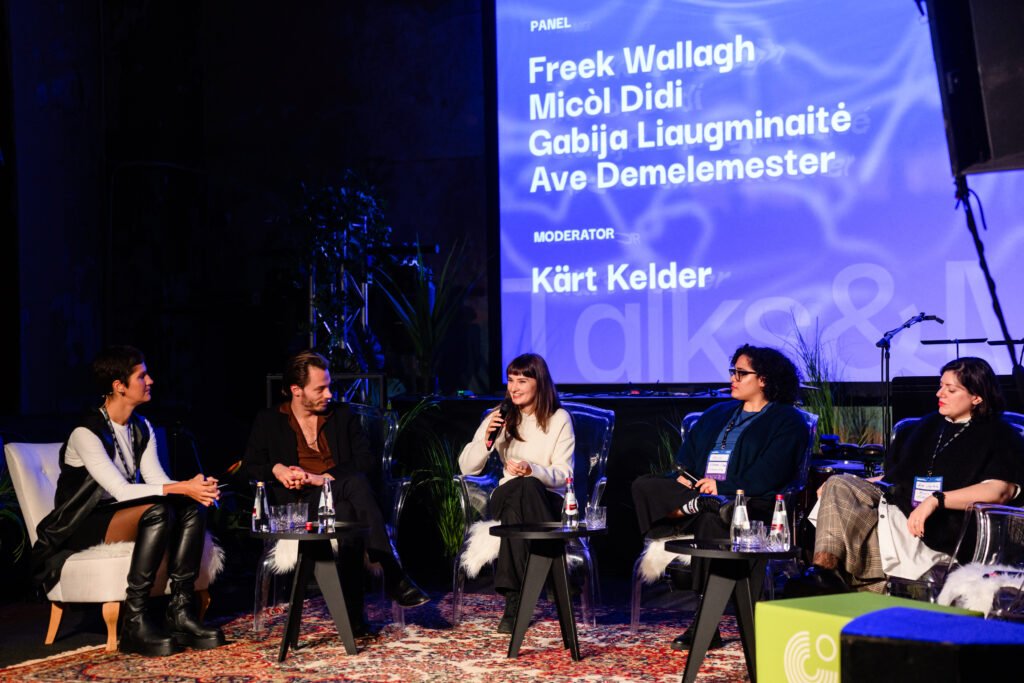
The panel discussion It Takes a City to Raise a Dance Floor brought together Amsterdam Night Mayor Freek Wallagh, Micòl Didi from the Vienna Club Commission, Tallinn representative Ave Demelemester and Vilnius Night Office Project Manager Gabija Liaugminaitė. The discussion was moderated by Kärt Kelder. Participants shared their cities’ experiences, explored cooperation between municipalities and the cultural sector, and discussed practical measures to strengthen local music scenes.
Freek Wallagh presented the independent Night Mayor model, which focuses on representing the interests of the nightlife sector and maintaining dialogue with city authorities. Independent representation enables the sector to raise relevant issues, engage with decision-makers and maintain an autonomous position in relation to municipal policies.
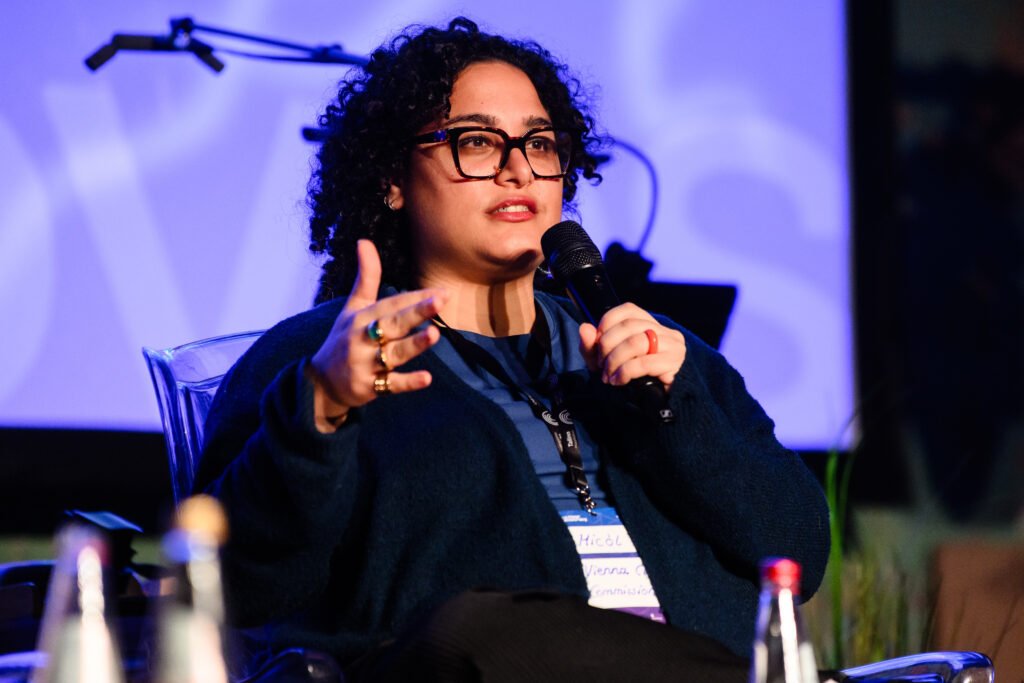
Micòl Didi from the Vienna Club Commission presented the Neighbourhoods for All project, which aims to strengthen cultural life across the city’s neighbourhoods while balancing the needs of different communities. One practical example involved safety initiatives in the Westgürtel area, home to a concentration of nightlife venues. The Vienna Club Commission conducted a survey on visitors’ perceptions of safety and used the findings to develop a set of shared safety measures that venues are encouraged to adopt voluntarily. The Commission also organised a joint event involving local nightlife venues, during which a dedicated awareness team was present to support visitors’ safety and wellbeing. This example demonstrates how research and cooperation within the sector can lead to practical safety improvements.
Ave Demelemester, Director of Music Estonia, discussed advocacy for the music sector at both the national level in Estonia and the municipal level in Tallinn. Demelemester emphasised that music sector organisations should not simply respond to decisions made by authorities, but actively participate in shaping cultural policy, clearly communicate their needs and advocate for better operating conditions.
The discussion also touched on strategic nightlife planning and international cooperation through programmes such as URBACT and Interreg. Music Estonia is seeking to strengthen cooperation with neighbouring countries, exchange experiences and identify shared opportunities for the music and nightlife sectors across Northern Europe.
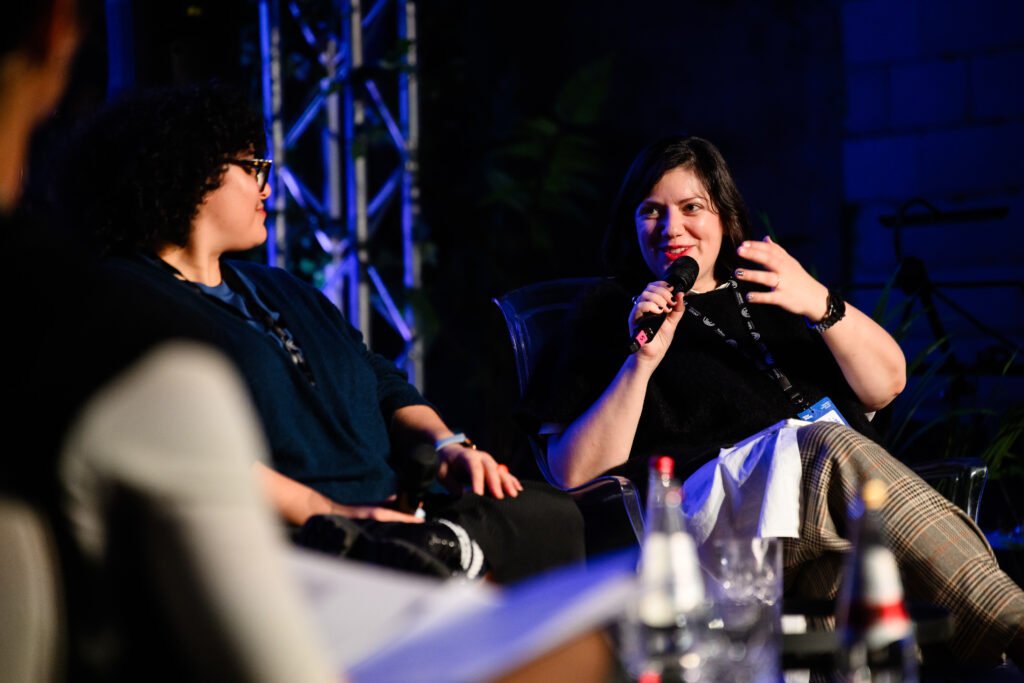
Gabija Liaugminaitė, Project Manager at Vilnius Night Office, contributed to the discussion by sharing Vilnius’ approach to municipal support for nightlife culture, dialogue between different urban communities and practical measures to strengthen the sector. The Vilnius experience demonstrates that the role of a municipality should extend beyond regulating nightlife. Cities can also actively contribute to its cultural value by supporting independent venues and developing the practical skills and capacities of the sector.
One example presented was the Dainyklos programme, funded by Vilnius City Municipality, which currently supports 23 independent music and cultural venues. The programme aims to sustain their activities, increase the diversity of cultural events and strengthen cultural life across different parts of the city.
Another example was Vilnius Nights, an event held in September that brought together four of the city’s clubs into a single nightlife route. One ticket allowed visitors to experience different dance floors, discover various music genres and explore new venues. Initiatives like this help clubs reach wider audiences and encourage local residents to participate more actively in the city’s nightlife culture.
“We highly value clubs and independent cultural venues in Vilnius. For us, it is important that these spaces are first and foremost relevant to the people who live here – that local audiences know them, visit them and support them. A vibrant local scene naturally becomes attractive to visitors as well. We also appreciate the efforts of Vilnius City Municipality to better understand the needs of the nightlife sector and help it grow. This requires ongoing dialogue between residents, businesses, event organisers and city authorities. The Night Office can act as a bridge between these groups, helping them communicate, find common ground and develop shared solutions,” says Gabija Liaugminaitė, Project Manager at Vilnius Night Office.
The Future of Nightlife Culture: Data and New Funding Models
The conference’s closing discussion, Looking Into the Future, explored the future of nightlife culture, the sustainability of the sector and the importance of long-term planning. One of the key themes was the need to systematically collect data on nightlife, better understand the sector’s circumstances and use this information to inform policy decisions.
Vilnius Night Office is also actively working in this area by conducting resident surveys, analysing nightlife data and collaborating with representatives of the sector. Its work also covers safety, noise prevention and mediation, with the aim of balancing a vibrant nightlife with the needs of city residents.
The conference also addressed the need for more flexible approaches to the creative sector and alternative funding models. One example discussed was Ireland’s Basic Income for the Arts programme. Under the pilot scheme launched in 2022, 2,000 selected artists and creative sector workers received €325 per week for three years. The programme aimed to provide greater financial stability and allow participants to dedicate more time to their creative work. Following an evaluation of the pilot, the Irish government approved a permanent scheme in 2026, providing for 2,000 selected artists to receive the same weekly payment for three-year periods. This example demonstrates how public funding for culture can support not only events and projects, but also artists directly by improving their working conditions and enabling sustainable creative careers.
The experiences shared by European cities in Tallinn highlighted different ways of supporting nightlife culture – through independent sector representation, financial support, safety initiatives, research and cooperation with municipal authorities.
In Vilnius, these approaches are already being put into practice through dedicated programmes and ongoing cooperation with the nightlife sector. The main priority is to create conditions in which independent venues can thrive, strengthen the local music scene and ensure that the city’s nightlife culture remains vibrant and relevant, first and foremost, to the people who live here.