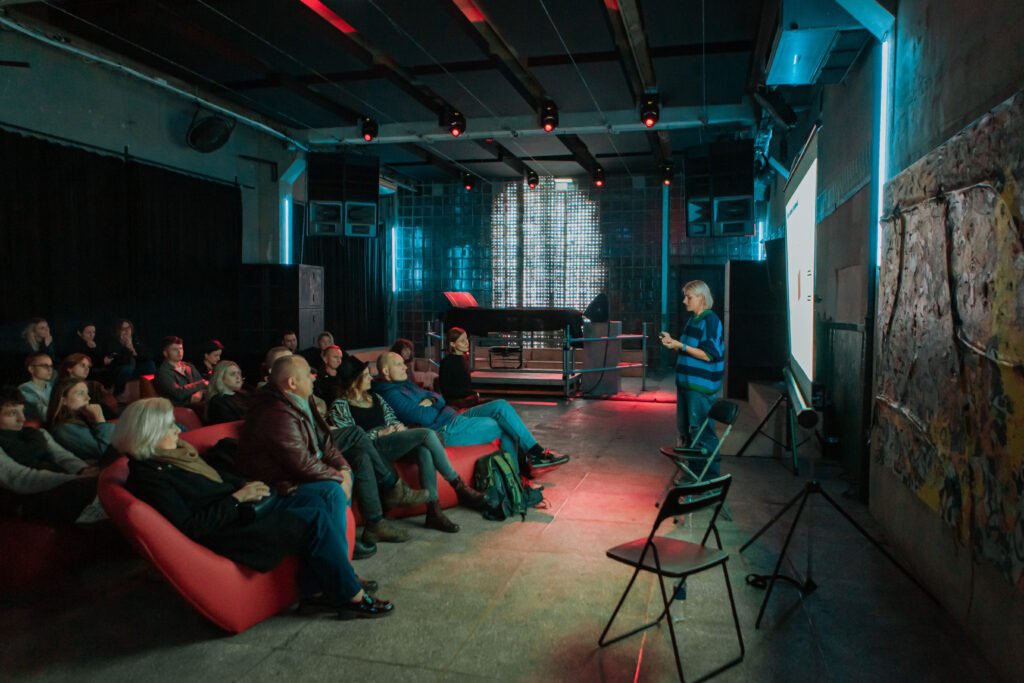
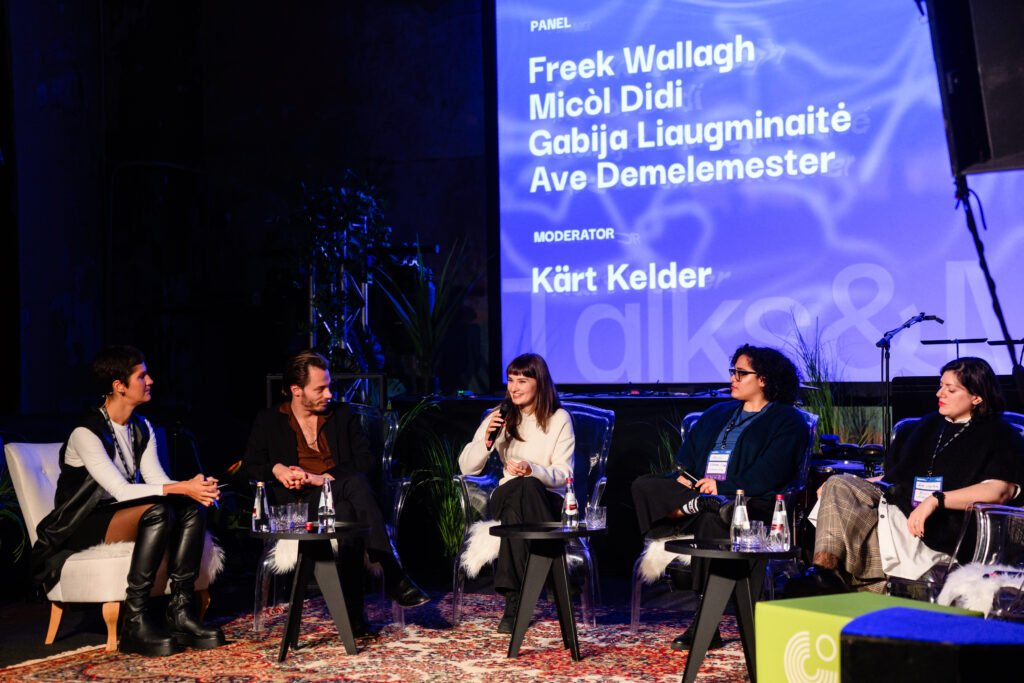
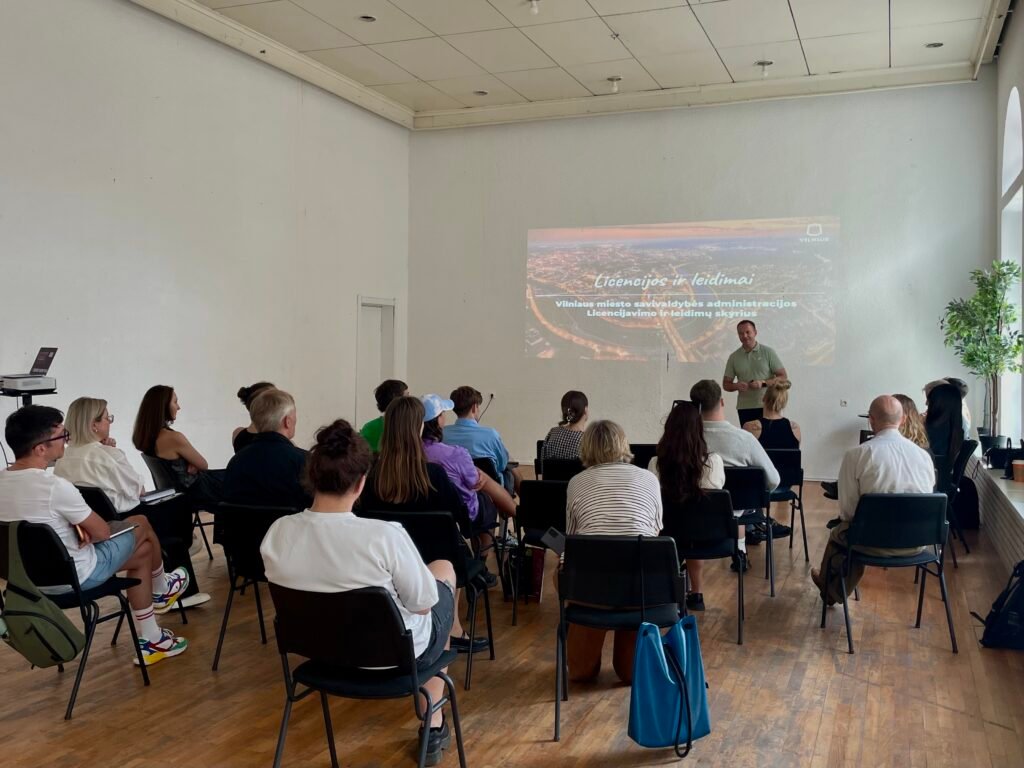
On 4–5 November, the Vilnius Night Office presented the Lithuanian capital’s experience in shaping night-time economy policy, strengthening the local music scene and creating better conditions for independent cultural venues at Riga Music Week, an international music industry conference held in the Latvian capital. Over two days, music industry professionals, artists, cultural organisations and representatives of European cities discussed the future of the music sector, international cooperation, cultural funding and the role of cities in developing their own distinctive cultural identities.
Cities Shouldn’t Copy Other Music Scenes – They Should Build Their Own
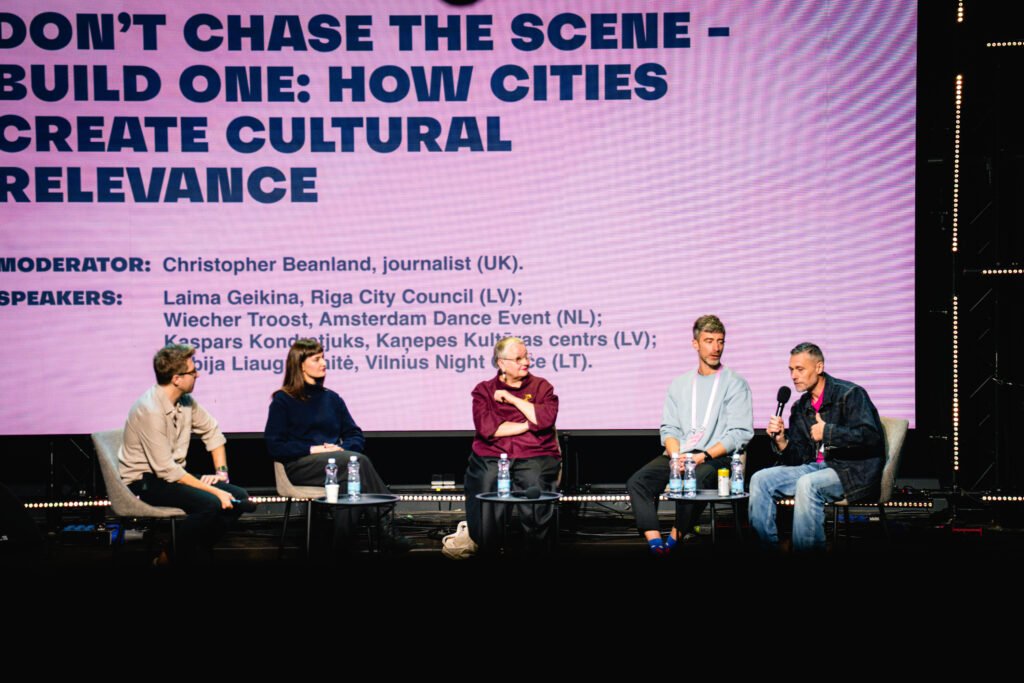
The Vilnius Night Office took part in the panel discussion “Don’t Chase the Scene – Build One: How Cities Create Cultural Relevance”. Together with Riga City Municipality representative Laima Geikina, Amsterdam Dance Event representative Wiecher Troost and Kaspars Kondratjuks from Riga’s Kaņepes Kultūras centrs, the discussion explored how cities can create favourable conditions for local music communities.
At the heart of the discussion was a question: what makes a city culturally attractive and distinctive? Does it require major international events, famous artists and examples set by world-renowned music capitals? Or is a city’s cultural identity shaped primarily by local communities, independent venues and the initiatives that emerge within them?
The panellists agreed that cities do not need to aspire to become the next Berlin, Amsterdam or London. What matters far more is recognising and strengthening the unique character of their own music scenes, creating opportunities for creative experimentation and ensuring that independent cultural initiatives can not only emerge but also survive.
In this context, the Vilnius Night Office presented its activities and the city’s experience in developing night-time economy policy. The discussion addressed how municipalities can contribute to vibrant nightlife while balancing the interests of culture, the economy, urban planning and local communities.
One of the key priorities of such policies is creating the conditions for independent cultural venues to operate. These spaces do more than host events: they provide opportunities for emerging artists, bring communities together, encourage creative experimentation and contribute to a city’s cultural diversity.
Vilnius’ Dainyklos Programme – An Investment in the Local Music Ecosystem
As a concrete example of Vilnius’ cultural policy, the conference featured the city’s Dainyklos programme, designed to strengthen small and medium-sized independent music venues.
The programme aims to improve venue infrastructure, increase visibility and create more opportunities for local artists to perform. These grassroots music venues play an important role in the music ecosystem: they are often where artists begin their careers, build their first audiences and give rise to new musical movements.
The discussion emphasised that strengthening a music scene cannot be limited to organising major events. Even internationally renowned festivals depend on local music infrastructure that allows artists to develop consistently, experiment and find their audiences.
The panellists also discussed the responsibility of municipalities to ensure access to affordable cultural spaces, adequate infrastructure and funding opportunities. At the same time, they stressed that public support should help preserve the independent character of music scenes rather than dictate their creative direction.
One Festival Doesn’t Make a Career
he career development of emerging artists was one of the conference’s key topics. The discussion “One Festival Isn’t a Career: Making Festival Momentum Last” explored how artists can make the most of opportunities offered by international showcase festivals.
Events such as Tallinn Music Week and Eurosonic Noorderslag give artists opportunities to perform in front of music industry professionals and establish connections with concert promoters, booking agents and record labels. However, a single successful performance does not guarantee a sustainable career.
The conference highlighted that international success requires a long-term strategy, a professional team and consistent work. Artists need not only to select the right festivals but also to plan meetings in advance, present their music to potential partners and maintain the relationships they establish.
This discussion once again underlined the importance of local music infrastructure. Before appearing at international festivals, artists need opportunities to perform regularly in their home cities, gain stage experience and build an audience. Strengthening small and medium-sized music venues is therefore an essential part of developing the wider music industry.

Music Export Requires Long-Term Investment
The conference devoted considerable attention to the challenges facing the Baltic music industry and ways to improve its international competitiveness.
The discussion “Mind the Gap: The Reality of Music Companies in the Baltic States” examined the gap between music industry education, the capacities of local music businesses and the demands of international markets.
Speakers noted that the music sectors across the Baltic states face similar challenges, including limited financial resources, small domestic markets, restricted employment opportunities for industry professionals and the need to strengthen music management skills.
Another discussion, “Export Is Not a Project: Building Sustainable Music Industry Organisations”, emphasised that music export cannot rely solely on short-term projects. Successfully promoting a country’s artists internationally requires stable music export organisations, long-term funding and the continuous development of international relationships.
Ireland’s experience was discussed as one example of how public investment in music export infrastructure can create lasting opportunities for local artists and music businesses.
The discussions also highlighted that the economic value of the music industry extends beyond ticket sales and recorded music revenue. The sector contributes to the growth of tourism, hospitality, technology and other creative industries.

Music Events as a Reason to Travel
Another topic explored at the conference was the impact of music events on tourism and the attractiveness of cities.
The discussion “Worth Travelling For: When Events Become Destinations” examined how international music festivals can become travel destinations in their own right.
A representative of Dekmantel, an electronic music festival held in the Netherlands, shared insights into its audience: more than half of the festival’s visitors come from abroad, and some travel to the Netherlands for extended stays rather than just a few days.
The discussion emphasised that attracting international audiences depends not only on a festival’s programme but also on the overall visitor experience, including urban infrastructure, accommodation, restaurants, cultural activities and other leisure opportunities.
Festivals are also increasingly analysing audience data to better understand visitors’ needs across different countries and tailor their communications accordingly.
These insights are relevant to Vilnius as it seeks to strengthen its appeal as a culturally vibrant destination. International events can provide a compelling reason to visit a city, but an equally important role is played by the permanent cultural and nightlife infrastructure that encourages visitors to stay longer.

Lithuanian Music Takes the Stage at Riga Music Week
This year’s Riga Music Week featured strong participation from the Lithuanian music sector. Held for the second time, the festival brought together artists from more than ten European countries, with performances taking place across six stages in Riga’s Tallinas Street Quarter.
Six Lithuanian music acts performed as part of the festival programme: Antikvariniai Kašpirovskio Dantys, El Chico Fuendre, Grete, Press the Button, SHWR and Vilnius JJAZZ Ensemble. Their performances introduced international audiences and music industry professionals to the diversity of Lithuania’s music scene.
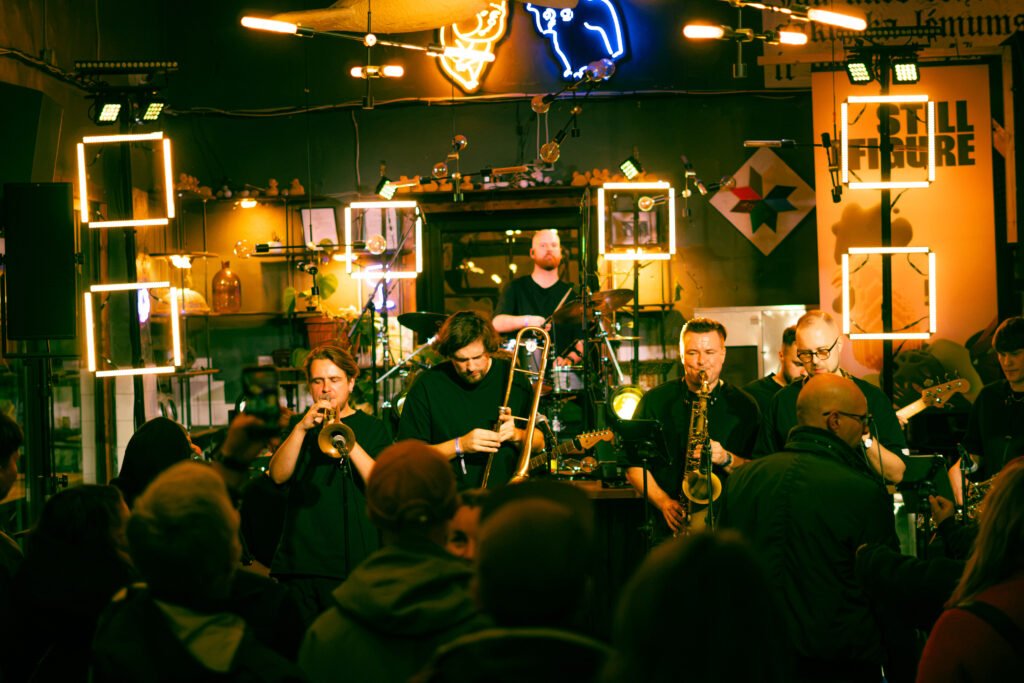
The Lithuanian music industry was also represented at the conference by the Lithuanian Music Business Association and independent music managers. Participation in events of this kind creates opportunities to establish new professional connections, introduce Lithuanian artists to international markets and develop cooperation with music industry organisations from other countries.
Riga Music Week aims to strengthen cooperation within the Baltic music industry and increase the international visibility of artists from the region. Alongside concerts and conference sessions, the programme included the Music Tech Expo, the Music Bazaar record and merchandise fair, and the first-ever announcement in Riga of the Music Moves Europe Awards 2027 nominees on 4 November. These awards are among Europe’s most significant recognitions for emerging musical talent.
International Experience to Strengthen Vilnius’ Nightlife
Participation in Riga Music Week provided an opportunity to share Vilnius’ experience with the international music industry community and learn about approaches adopted by other European cities.
The topics discussed at the conference – from funding independent music venues and supporting emerging artists to music export and cultural tourism – are closely aligned with the Vilnius Night Office’s areas of work.
The insights gained and international connections established will support the continued development of the Dainyklos programme, strengthen cooperation with music sector stakeholders and help identify new ways to create a vibrant, diverse and distinctive nightlife scene in Vilnius.