Do young people no longer want to go clubbing, or have their expectations of a night out in the city simply changed? Is nightlife in decline, or are new forms of it emerging? And how should Vilnius itself evolve alongside changing habits and expectations?
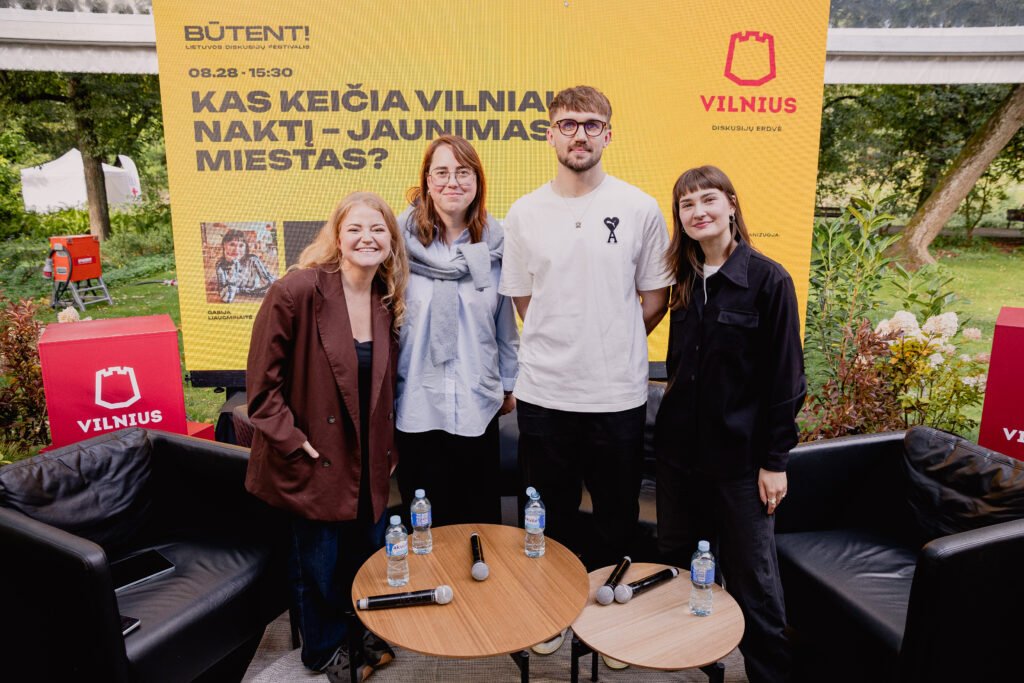
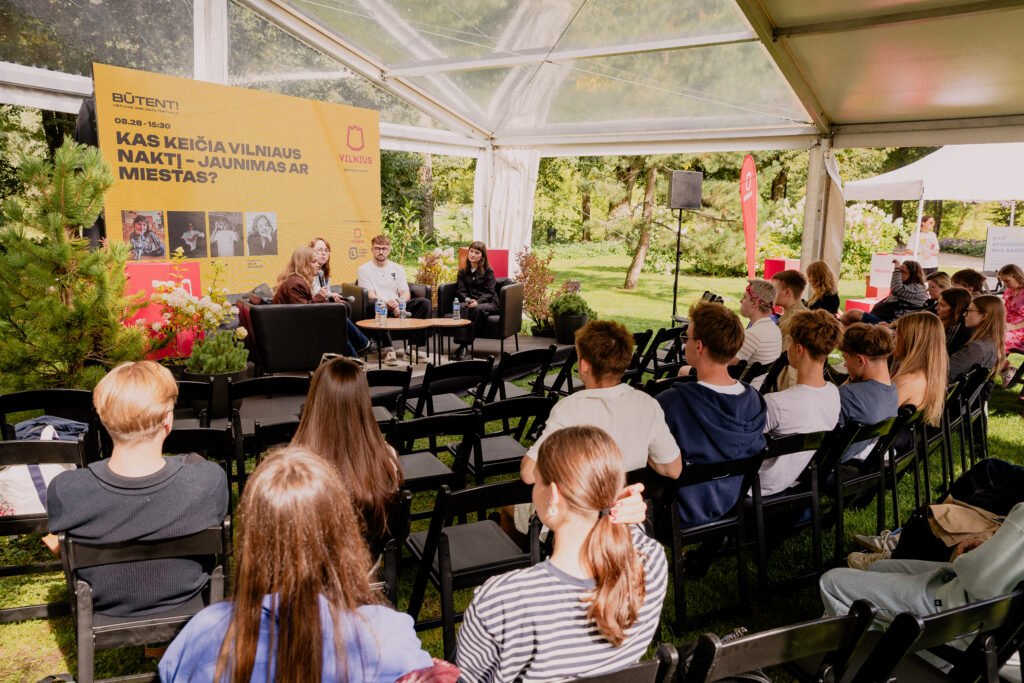
These were some of the questions explored on 28 August at the “Būtent!” discussion festival in Bernardinai Garden, during the Vilnius Night Office discussion “What Is Changing the Vilnius Night?”
The conversation brought together three different perspectives: that of event organisers, represented by Benas Bužinskasfrom the “Draugai Draugams” community; young people, represented by Edita Koliataitė, head of the “Bendra būtis” open youth centre and a youth worker; and the city, represented by Gabija Liaugminaitė, Project Manager at the Vilnius Night Office. The discussion was moderated by Miglė Miglinaitė.
Young people haven’t disappeared – they are simply more selective
One of the central questions of the discussion was whether declining attendance at some traditional nightlife venues means that young people are losing interest in nightlife altogether.
Edita Koliataitė, who works with young people on a daily basis, pointed out that today’s youth are receptive, inquisitive and curious, but they plan their time and carefully choose where to spend it. It is not just the event itself that matters – who they are going with and when, who will be performing, what the environment will be like and whether they will feel safe all play a role. Young people therefore do not simply go anywhere, and even events specifically aimed at them do not automatically guarantee their interest.
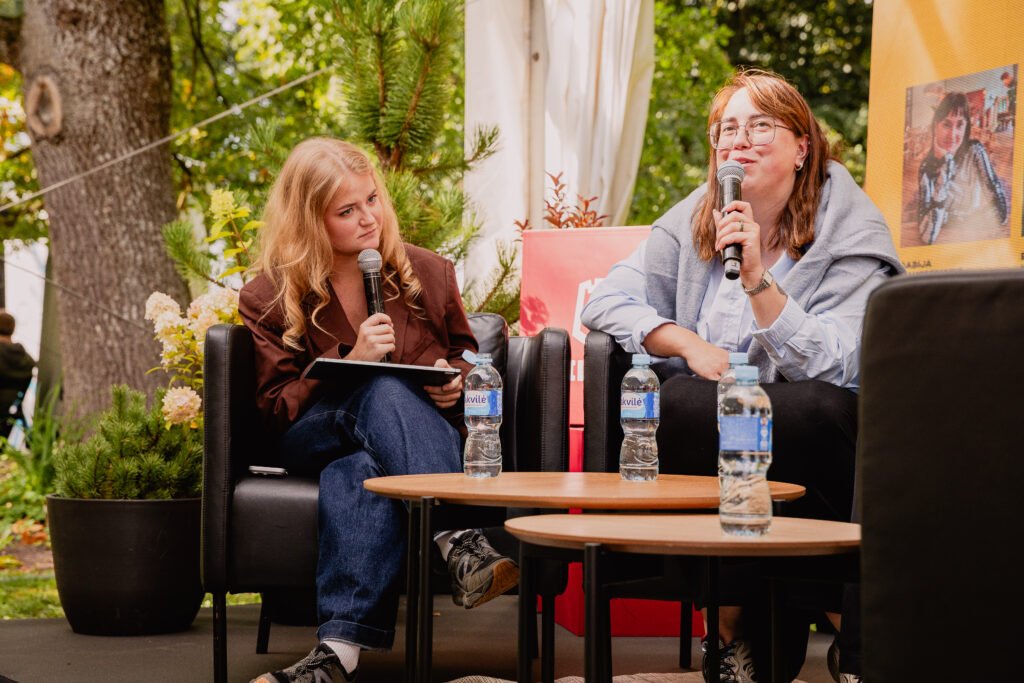
At the same time, young people have plenty of ideas and a desire to take initiative. What matters is creating an environment in which they can develop their own activities, experiment and contribute to shaping the city’s culture.
Benas Bužinskas also spoke about contrasting attendance trends. According to him, Cornercafé has seen a decline in attendance, while “Draugai Draugams” events have experienced the opposite. This suggests that changes in nightlife should not necessarily be viewed as a uniform decline across the entire sector, but rather as audiences shifting between different formats.
What is changing is not the need to be together, but the ways we do it
The discussion also raised a broader question: what do we actually mean by nightlife today?
The Vilnius Night Office approaches it as part of a broader night-time economy ecosystem, encompassing not only clubs and bars, but also concerts, restaurants, theatre, cinema, festivals, public spaces, transport, safety, urban infrastructure and the people who work at night. The difficulties faced by some clubs therefore do not necessarily signal the end of club culture or nightlife itself.
People still want to meet, dance, listen to music and be part of a community, but today they have far more options for how to do so. A club is no longer competing only with another club – it is competing for people’s time and attention with concerts, festivals, other cultural activities and the full range of leisure alternatives available to them.
There is an economy behind every event
As audiences change, the question of how the economics of nightlife are changing inevitably follows.
Speaking about the experience of “Draugai Draugams”, B. Bužinskas emphasised the importance of sponsors – events of this scale would not be possible without them. At the same time, organising events, like any other business, always involves risk: high attendance at one event does not automatically guarantee the same success next time.
The discussion also touched on declining alcohol consumption among young people. B. Bužinskas suggested that this should not be viewed solely as an organic generational shift in habits, but also in the context of government policy, noting Lithuania’s decision to raise the minimum legal age for purchasing alcohol to 20.
G. Liaugminaitė, meanwhile, stressed that the sector’s economic challenges cannot be explained simply by saying that “Gen Z doesn’t drink”. Venues are affected by rent, wages, artist fees, purchasing power and the growing number of leisure options. If alcohol sales eventually account for a smaller share of nightlife revenue, other operating models will need to be explored – including a greater role for ticket revenue, other commercial income streams or cultural funding.
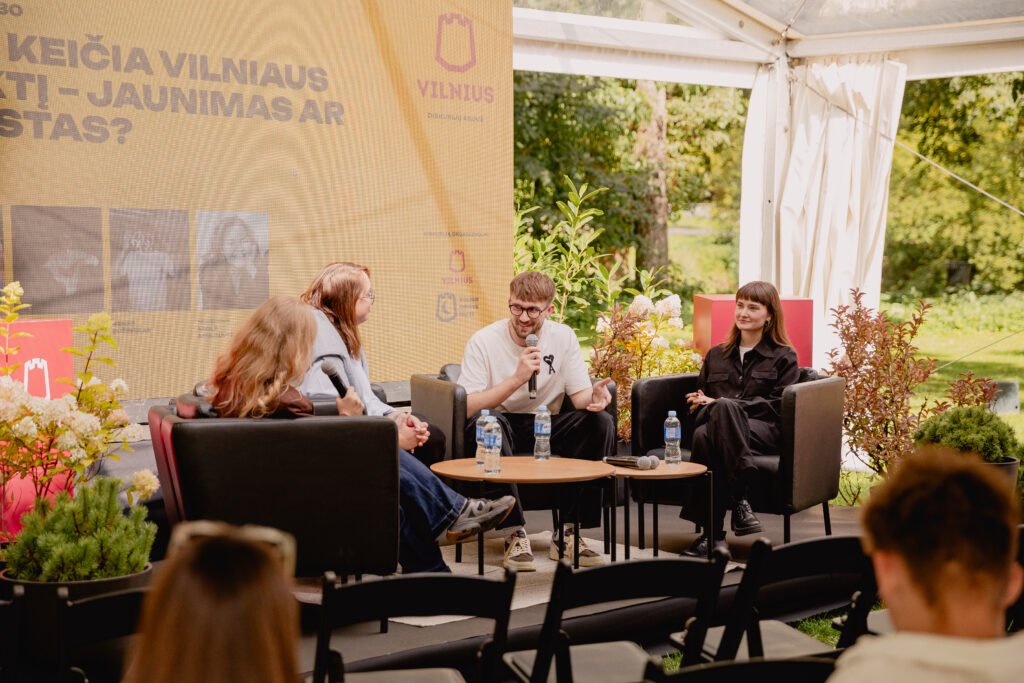
Cost also plays an important role in young people’s choices. A night out costs more than the price of an event ticket – transport, food, drinks and other expenses all add up. At the same time, high-quality cultural programming also comes at a cost: artists and staff need to be paid, while technical production and safety measures also require resources.
The discussion therefore highlighted an important distinction between making every individual event accessible to everyone and ensuring that the city’s nightlife as a whole offers options at different price points.
Safety is created, not guaranteed
Safety emerged as another factor influencing whether someone decides to participate in nightlife at all. E. Koliataitė described it as one of the considerations young people take into account when deciding where to spend their time. B. Bužinskas explained that the “Draugai Draugams” organisers devote considerable attention to safety at their events and personally oversee how it is managed – their reputation and ability to continue organising events depend directly on people’s experiences.
From the Vilnius Night Office perspective, a safe night does not mean an environment entirely free of risk. What matters is that risks are recognised and reduced, and that people know where to turn and can trust that help will be available when needed. This covers a person’s entire journey through the city – leaving home, spending time at an event or nightlife venue, and getting home safely.
The discussion also introduced the Vilnius Night Office initiative “Čia – saugiau” (“Safer Here”). The label does not guarantee that an incident will never occur at a participating venue. Rather, it indicates that the venue actively works to reduce risks and is prepared to respond appropriately when help is needed.
The night should not only be regulated – it should be planned
Towards the end of the discussion, the conversation returned to the role the city itself should play as nightlife evolves. New event formats and people’s needs often change faster than urban infrastructure, regulation or funding mechanisms. The night therefore cannot be viewed solely through the lens of noise, alcohol consumption or public order. A vibrant night-time city requires convenient transport, safety, accessibility, balanced noise management and the right conditions for cultural and nightlife venues to operate.
It is not only young people who are changing the Vilnius night, nor is it only the city. People’s needs and choices are evolving, and the nightlife sector and the city itself need to evolve with them. The night is a fully-fledged part of urban life – and as such, it should not only be regulated, but also planned.
The discussion showed that changes in Vilnius nightlife cannot be explained simply by saying that “young people don’t go clubbing anymore”. Audiences are changing, event organisers are adapting, and the city itself is evolving. The most important question, therefore, is not whether Vilnius nightlife will remain as it once was, but what kind of nightlife we want to create for the future.