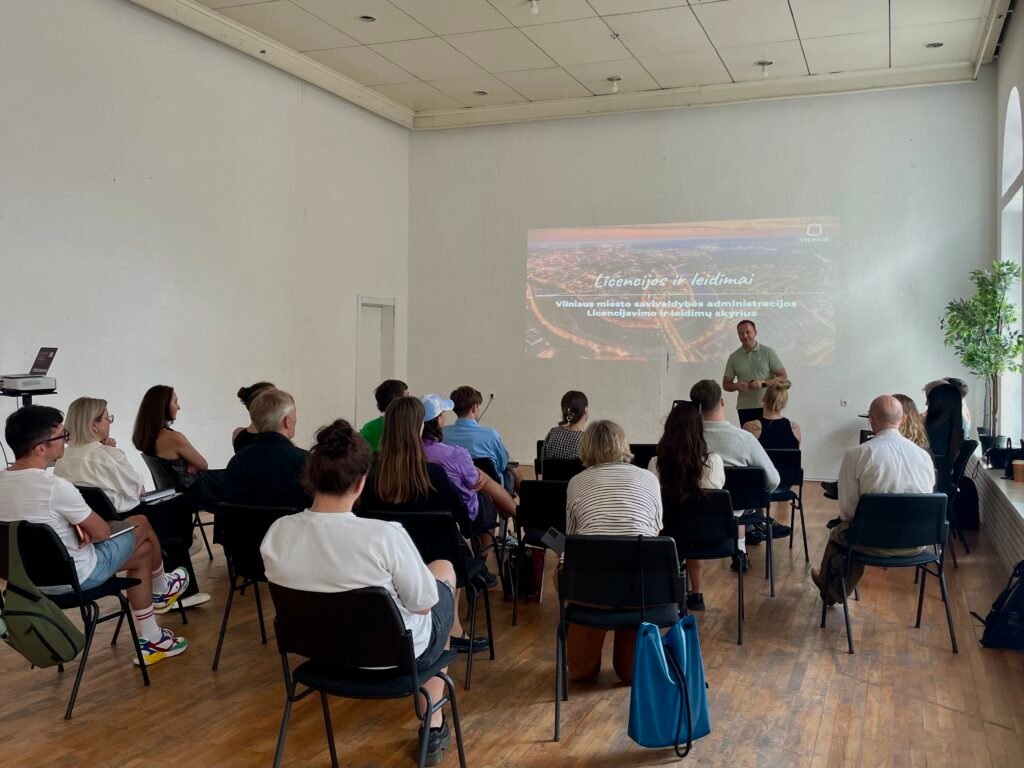
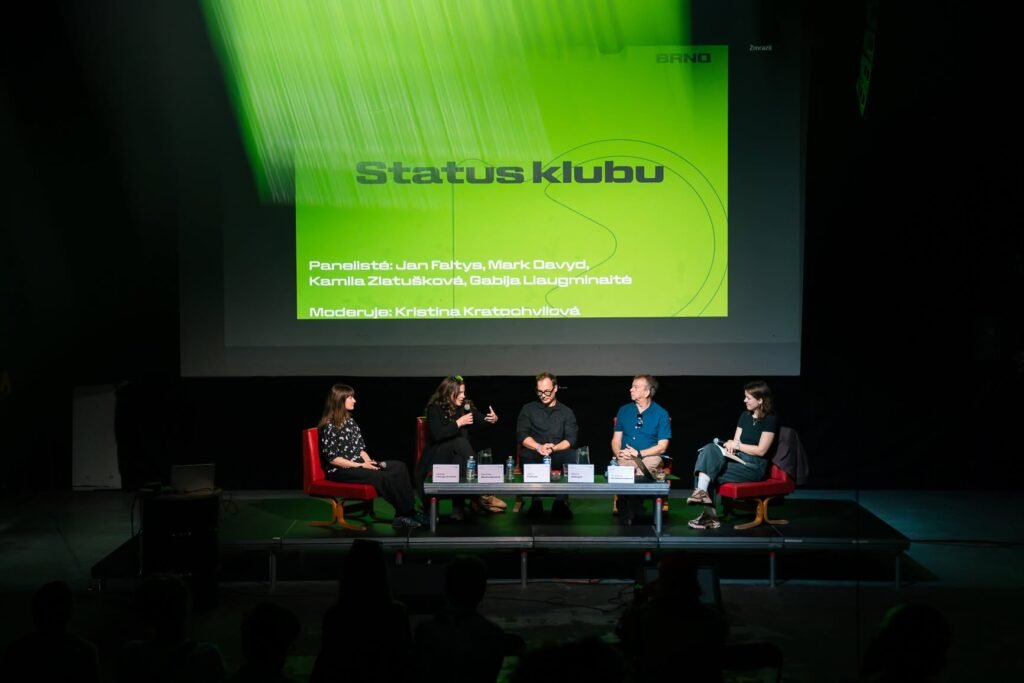
On 27–28 November 2025, Vilnius was presented at the international nightlife conference Stadt Nach Acht in Berlin, where the city’s nightlife and the work of the Vilnius Night Office attracted attention on the international stage.
The two-day event brought together nightlife professionals from cities across Europe and beyond. Discussions focused on nightlife governance, safer events, youth accessibility, climate change challenges, and inclusion in nightlife.
Vilnius on Stage Alongside Zagreb and Tallinn
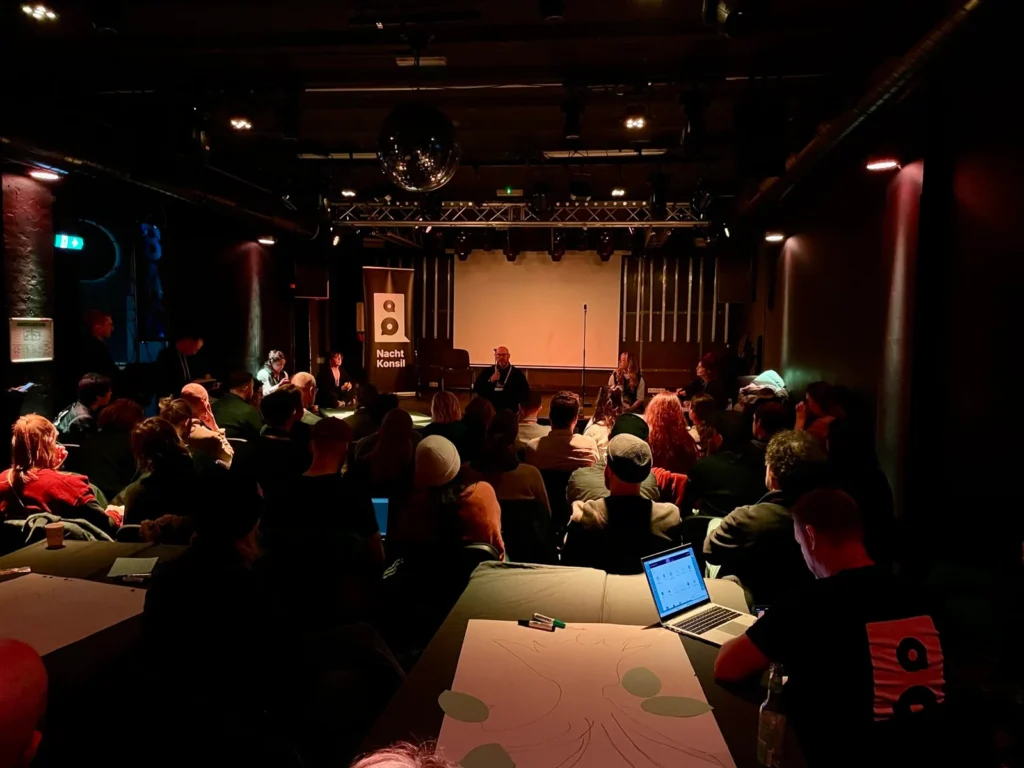
On 28 November, the session “Nightlife Reports LTU–HRV–EST” presented the experiences of Vilnius, Zagreb, and Tallinn in developing their night-time economies. The session was dedicated to peer learning: Anja Wertag (Zagreb) shared research on psychoactive substance use patterns in Zagreb’s clubs; Tallinn (Estonia) presented its experience from the URBACT project Cities After Dark and its nightlife strategy; and Vilnius showcased its grassroots music venue network, safer nightlife initiatives, and international cooperation activities.
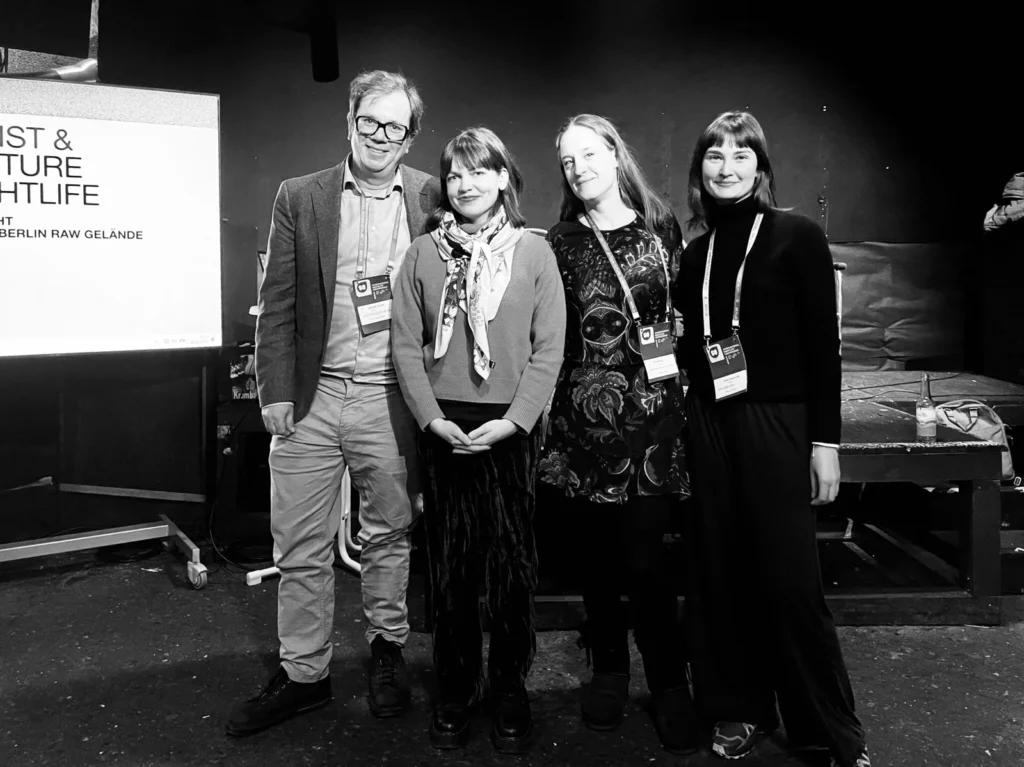
Gabija Liaugminaitė, Project Manager at the Vilnius Night Office, presented the Office’s priorities and activities, including the Dainyklos grassroots venue programme, the city’s noise management algorithm, and initiatives related to psychoactive substance use prevention and harm reduction. The session also introduced and discussed the ongoing development of a nightlife data and research framework for Vilnius.
The discussion was moderated by Alexander Bücheli, Head of Zurich’s Bar and Club Commission and one of the most influential voices in nightlife governance in Europe.
Nightlife as an Integral Part of Urban Policy
One message was repeated throughout the conference: successful nightlife development begins with political recognition and strategic planning.
Discussions on the United Kingdom’s Purple Flag scheme, which recognises well-managed nightlife destinations, as well as examples from Germany and Switzerland, highlighted several key principles:
- Cities need dedicated nightlife coordinators – whether in the form of a night commission, night office, or night mayor – to connect municipalities, police, health services, businesses, and cultural stakeholders.
- Strong political support is essential.
- Nightlife should be integrated into a city’s strategic planning documents.
These discussions are highly relevant for Vilnius, especially as the city continues to strengthen its nightlife governance structures and develop new policy frameworks.
Data and Research as the Foundation for Decision-Making
Several presentations emphasised that data helps cities better understand existing conditions and develop solutions tailored to their specific contexts.
For example, under the UK’s Purple Flag model, cities are assessed using clearly measurable indicators, including residents’ perceptions of safety, visitor flows, spending patterns, social behaviour, and visitor numbers. These assessments are complemented by expert site visits.
In Zagreb, research into psychoactive substance use in clubs became the basis for dialogue with hospitals, police, and safety services. The data helped shift discussions away from subjective opinions and towards evidence-based decision-making.
Behavioural studies examining when and how young people engage with nightlife, what types of events they attend, and how they move around cities help policymakers understand nightlife as both an economic and social phenomenon – and as an opportunity for positive change, rather than merely a challenge.
Awareness: From Grassroots Initiatives to Mandatory Standards
The discussion “Fearless Dancing: 15 Years of Awareness Concepts” explored how understandings of safer spaces and awareness practices have evolved over the past fifteen years.
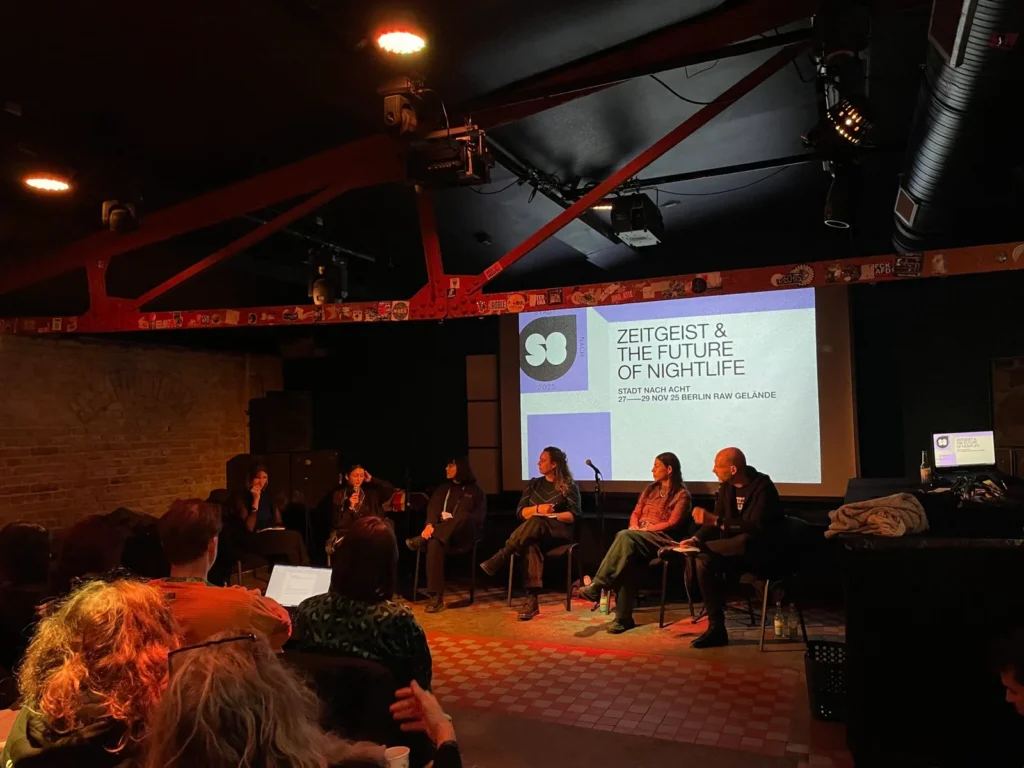
Key takeaways included:
- Harm reduction services in nightlife settings originally emerged as a response to sexual violence but now address all forms of discrimination and have become one of the central topics in nightlife governance.
- In Vienna, Austria, awareness standards and harm reduction services will become mandatory from 2026 onwards, with clearly defined methods, procedures, and responsibilities for venues.
- Over time, concerns have emerged regarding the risk of awareness work being organised unprofessionally, relying on unpaid labour, overlooking staff burnout, and lacking adequate support structures.
- Awareness concepts alone are insufficient if venues remain physically unsafe due to issues such as poorly lit toilets, inadequate lighting, or unclear emergency exits. Safety must be supported by both urban design solutions and strong commitment from venue management.
Inclusion and the Role of Migrant Communities
The discussion “Basslines Beyond Borders: Migrant Legacies in German Club Culture” examined how migrant and POC (People of Colour) communities have shaped and continue to shape Germany’s club culture.
During the panel discussion, speakers emphasised that the contributions of these communities are critical to the scene, yet funding and institutional recognition often lag behind. Collectives organised around identity do not necessarily create “ethnic” or “regional” sounds; instead, they often develop hybrid identities and new genres that reshape the sonic landscape of cities.
Meaningful support can be provided through dedicated funding programmes, grants, and affordable or free access to infrastructure.
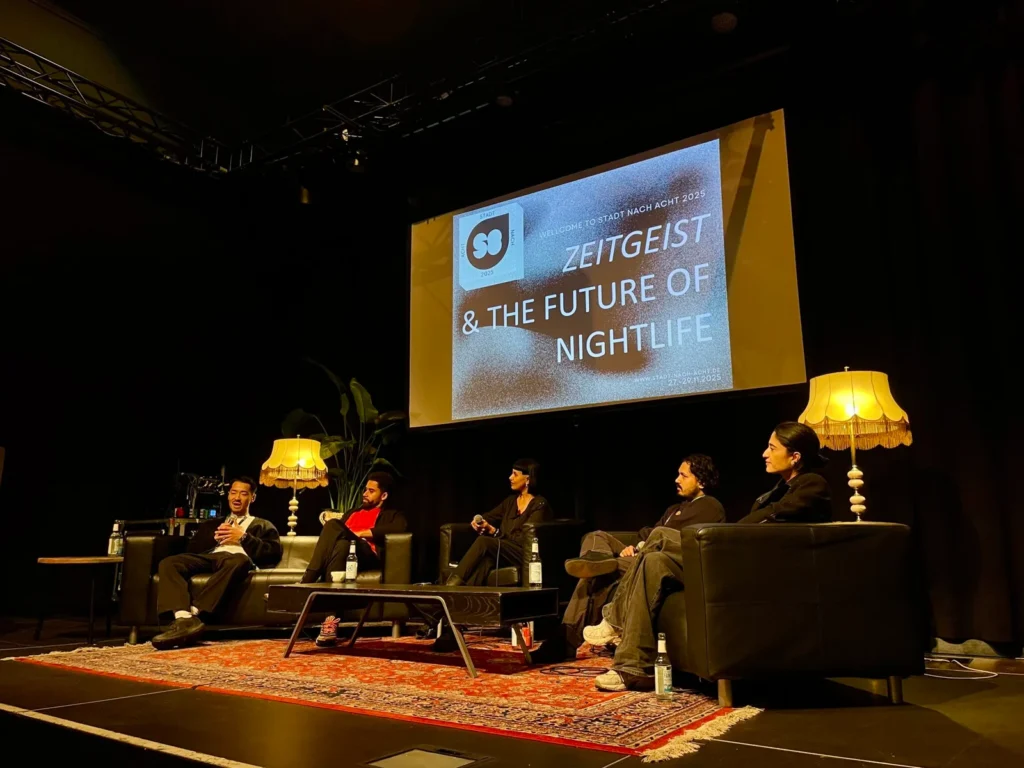
For Vilnius, these discussions serve as a reminder that promoting inclusion requires accessible infrastructure and financial support mechanisms for minority and migrant communities.
Youth and Accessibility
Presentations from Switzerland and Belgium highlighted the importance of actively including young people in nightlife.
In Ghent and Antwerp, dedicated youth spaces have been created beneath railway infrastructure and in underground locations. These projects help address noise concerns while simultaneously creating infrastructure for smaller and more experimental cultural scenes.
Youth spaces function as a form of social policy: they provide places where young people can go, rather than simply regulating where they cannot go.
The Night-Time City as an Opportunity: Spatial Design and Climate Challenges
The session “Synergies in Practice: Creativity, Climate & the Night” focused on how nightlife can adapt to climate and noise-related challenges.
Speakers highlighted the role of modular, easily adaptable structures and sound-insulating materials such as cork and green infrastructure in creating temporary and flexible night-time spaces.
Public spaces – including parks, squares, and schoolyards – can become flexible night-time venues if cities begin to view them as opportunities rather than problems.
Nightlife Governance Models
Examples from Germany and Austria demonstrated that effective nightlife governance depends on cross-sector collaboration.
Night commissions often function as advisory and decision-making bodies where municipal representatives and nightlife stakeholders work together. In some cities, such as Paris, internal municipal surveys are conducted to examine the role of each department in shaping nightlife policy, reinforcing the idea that nightlife is a cross-cutting issue.
The connection between health, youth policy, policing, culture, and urban planning enables cities to develop coordinated approaches rather than fragmented and sometimes contradictory solutions.
Vilnius is already moving in this direction, but the conference clearly demonstrated that cities achieving the greatest consistency are those that integrate nightlife into their overall systems of urban governance.
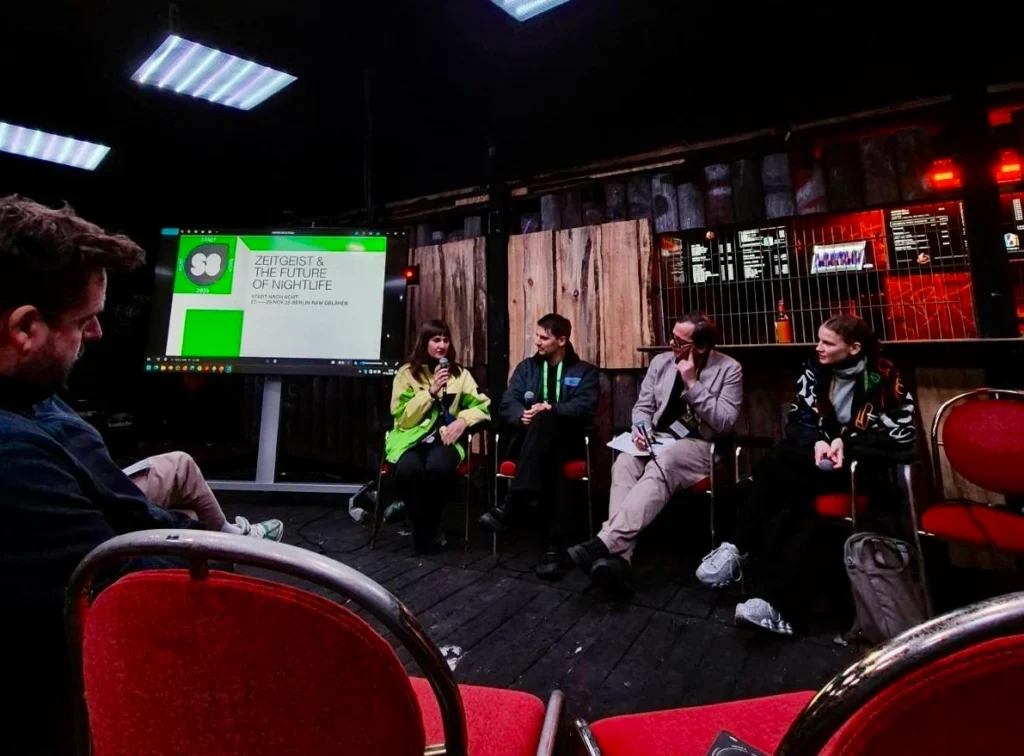
What Did Vilnius Bring Home?
The Stadt Nach Acht conference once again demonstrated that Vilnius is not on the periphery of the conversation, but part of the same dialogue as London, Paris, Glasgow, Vienna, Zurich, and Tallinn.
At the same time, it served as a reminder that nightlife is not simply about successful events. A thriving night-time economy is the result of long-term policy development, research, international cooperation, and sustained collaboration between stakeholders.