At the c/o pop Convention held in Cologne, Vilnius was introduced as a city that is strategically strengthening its music ecosystem and seeking long-term solutions for its local scene. Gabija Liaugminaitė, Project Manager at the Vilnius Night Office, took part in an international discussion on sustainable music city strategies, where she presented Vilnius’s experience and the “dainyklos” (small venue) project.
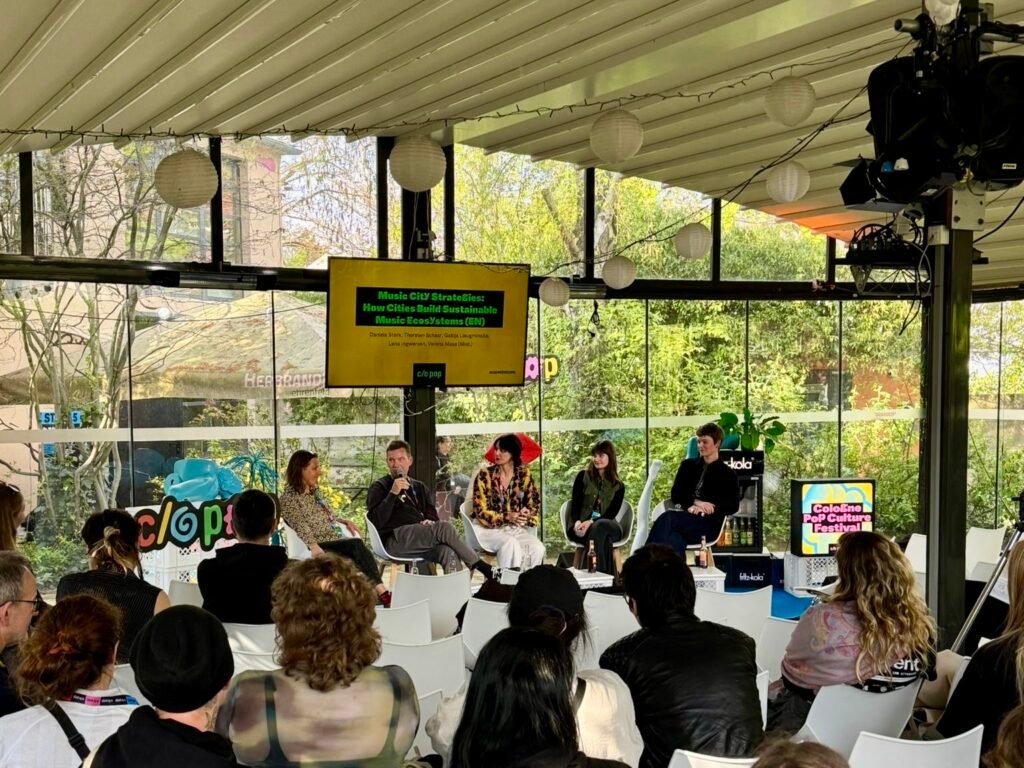
The “c/o pop Convention” is a German music industry conference held annually in Cologne since 2004, bringing together representatives from the music business, cultural policy, city marketing, and festivals. The panel discussion initiated by Music Düsseldorf, titled “Music City Strategies: How Cities Build Sustainable Music Ecosystems,” focused on how cities can strategically develop their music ecosystems, strengthen international connections, and create long-term impact. Alongside the Vilnius representative, the discussion featured Lena Ingwersen, head of Music Cities Network, Daniela Stork from D.Live and Music Düsseldorf, and Thorsten Schaar from Visit Düsseldorf. The discussion was moderated by director and University of Cologne lecturer Verena Maas.
During the discussion, Vilnius also presented the “dainyklos” project, through which the city supports small performance venues. Participants were interested in how the funding model works, what results have been achieved, and how the city collaborates with the local music community. Particular attention was drawn to the fact that most performers in these venues are local artists. The project was presented as a concrete example of how a municipality can contribute to strengthening a live music ecosystem. It also became clear that many of the challenges faced by music venues in Vilnius are similar to those in other European cities.
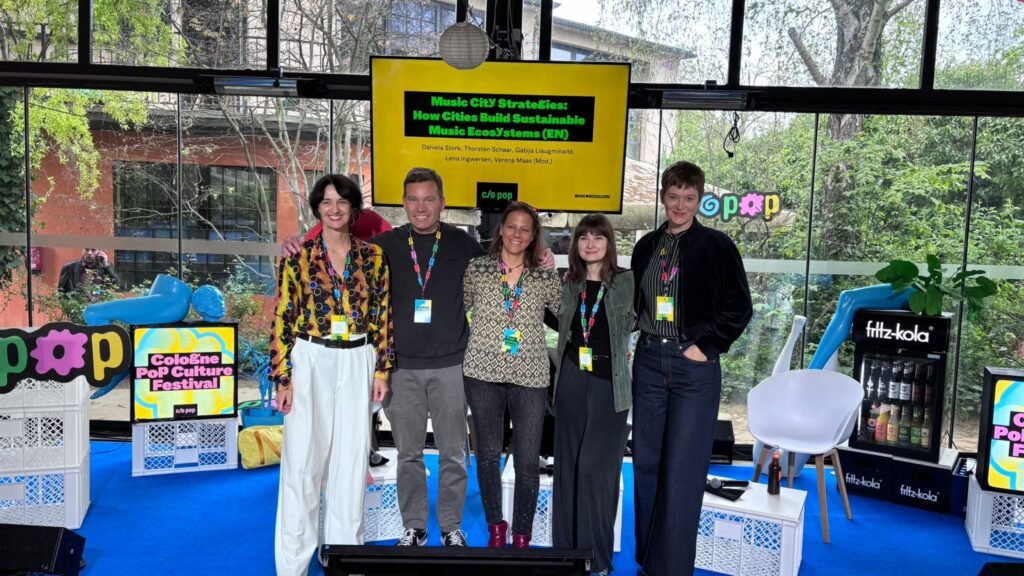
During the visit, closer connections were also established with cultural and music sector representatives from Cologneand Düsseldorf. Opportunities for future collaboration, knowledge sharing, and strengthening intercity ties were discussed.
“It was very interesting to hear how Düsseldorf is developing its ‘City of Live’ strategy and how the city looks at the entire concertgoer journey—from arrival in the city to post-concert activities. At the same time, it was great to see that our experience is also relevant to them: after the discussion, we received many questions about the ‘dainyklos,’ community engagement, and Vilnius’s approach to nightlife,” says G. Liaugminaitė.
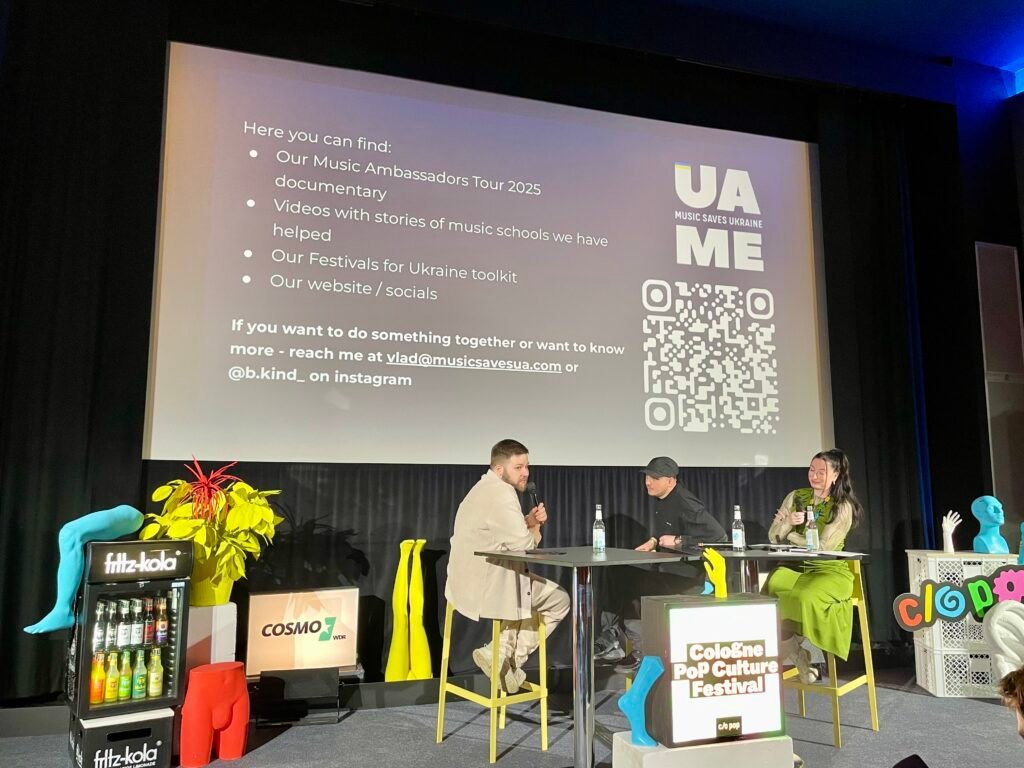
The conference also focused on Ukraine’s music scene and international music export. In one discussion, representatives of Ukraine’s music and club scene shared how Kyiv and Kharkiv continue to organize concerts, support clubs, and look for ways to sustain a vibrant cultural life despite the war.
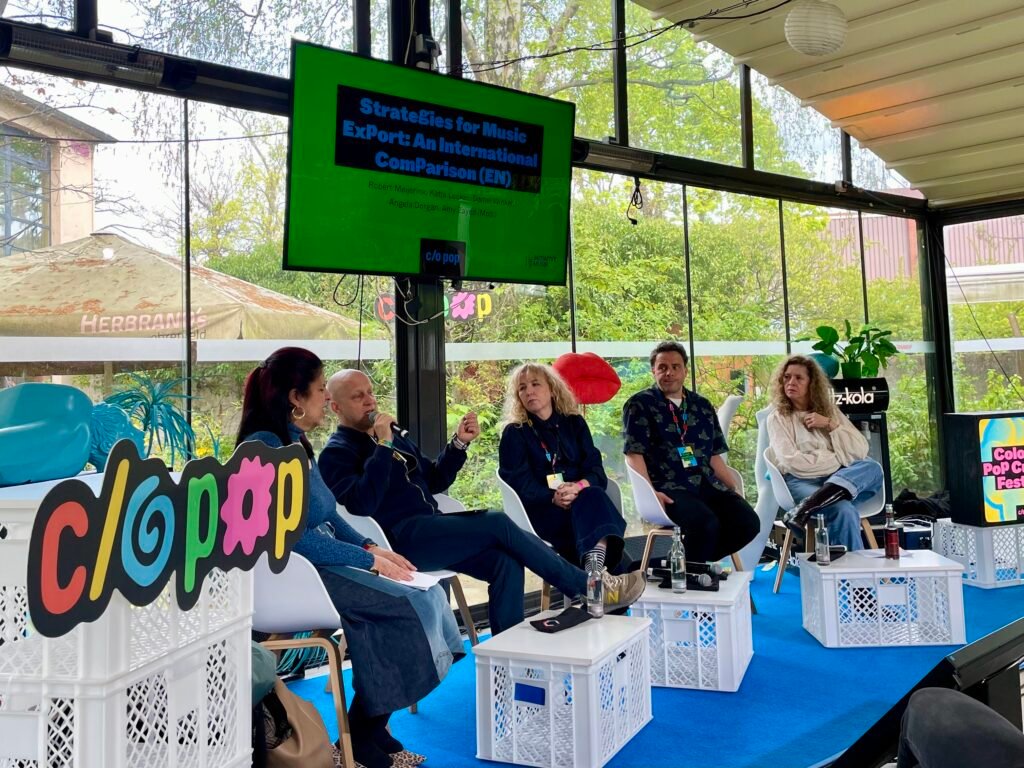
Another discussion explored how different countries build music export systems and why it is easier for some cities and states to help their artists enter international markets. Music export experts from Germany, France, Ireland, as well as a representative of the Eurosonic Noorderslag festival, discussed sustainable funding models for music export, the importance of networks, and how cities can help local artists gain visibility beyond their home countries.
The conference also featured the Berlin-based initiative Music Family Hub, which aims to improve conditions for parents and families working in the music industry. This project served as another reminder that a vibrant and sustainable music scene depends not only on concerts or funding, but also on whether people can remain in the industry over the long term.
Participation in the “c/o pop Convention” was an important opportunity to present Vilnius in the German music market, establish new connections, and demonstrate that Lithuania’s capital can be not only an attractive tour stop, but also a city with its own approach to music, culture, and nightlife.